toddlers program

— Programs —

Toddlers (2-3 years)


Nursery age group is active and children adopt an inquiry based approach to introduce Montessori materials to children. It is the period for grace and courtesy, language development, toilet training and assimilating every new piece of information. Our educator’s roles are to support and enrich your child’s learning by being with them providing resources and opportunities to learn and exercise their freedom for exploration.

Questioning and encouraging children to learn skills to be independent, investigate and solve problems knowing their strengths and weaknesses. Children are encouraged to express their thoughts and feelings refining their communication and interpersonal skills and are evolving to be confident learners.

Toddlers · 2–3 years · Norlane, North Geelong

The age of
"I do it myself."

If your two-year-old is loving, determined, emotional and fiercely independent — this is a very normal part of development.

Somewhere between two and three, your child stops being a baby and quietly becomes a person. They're walking with purpose. Talking in real sentences. Forming opinions about socks. They want to pour their own water, choose their own jacket, and do almost everything that everyone else is doing — only themselves. Our Montessori Toddlers program in Norlane meets this stage with the calm, the patience, and the prepared environment that makes "I do it myself" beautifully possible — for your child, and for you.
I do it myself
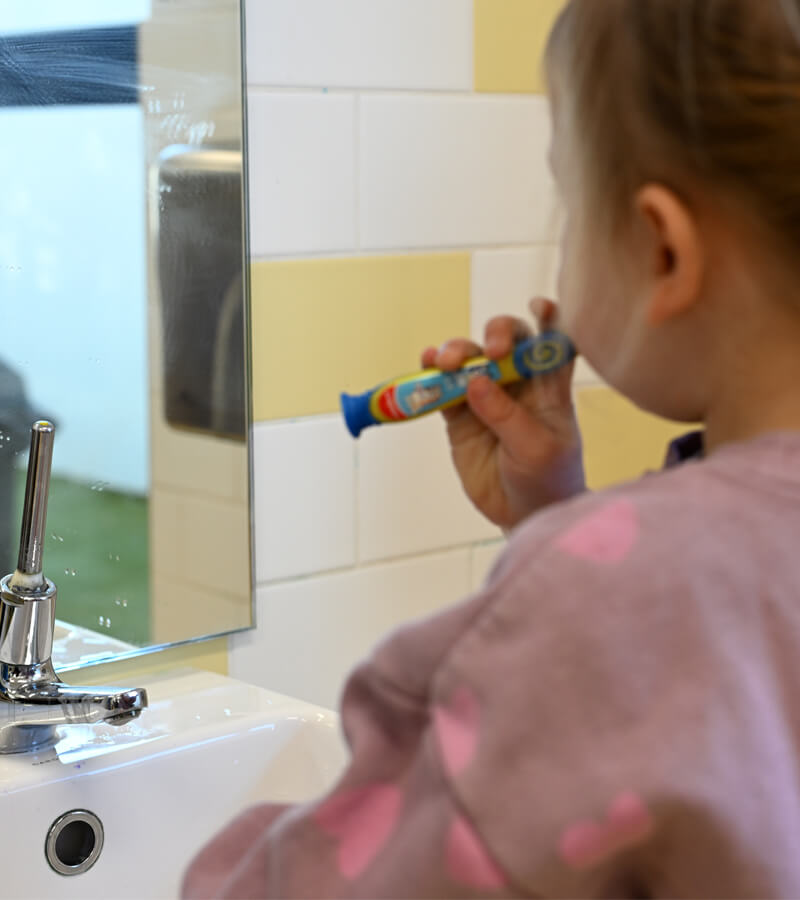
— A morning in the Toddlers room, Norlane.

I. The Stage

Two to three is one of the most extraordinarystages of human development.

In the space of a single year, your child moves from a few dozen words to full sentences. They begin to pretend, to remember yesterday, to picture tomorrow. A clear sense of "I" emerges — and with it, the conviction that "I" can do things on their own.

Our Toddlers room — in Norlane, North Geelong — is built around how this stage actually unfolds. Calm, ordered, beautifully scaled. Real materials. Real work. Educators who know when to step back, and when to step in. It's a Montessori early learning environment for families across Norlane, North Geelong and nearby suburbs, with a continuous pathway from six weeks to six years.

And we know you're tired. That this stage is harder than anyone warned you. We see you. The room your child walks into each morning is also a small kindness for you.
A guiding belief

Inspired by Montessori's belief that children need an environment prepared for their stage of development — built at their scale, and ready for the work they're already trying to do.

— Reflecting the Montessori approach

II. Inside the toddler mind

Four developmental shifts shaping every day in the Toddlers room.

Each shift is met with carefully chosen materials, a thoughtful daily rhythm, and educators trained to see what's emerging — and respond.

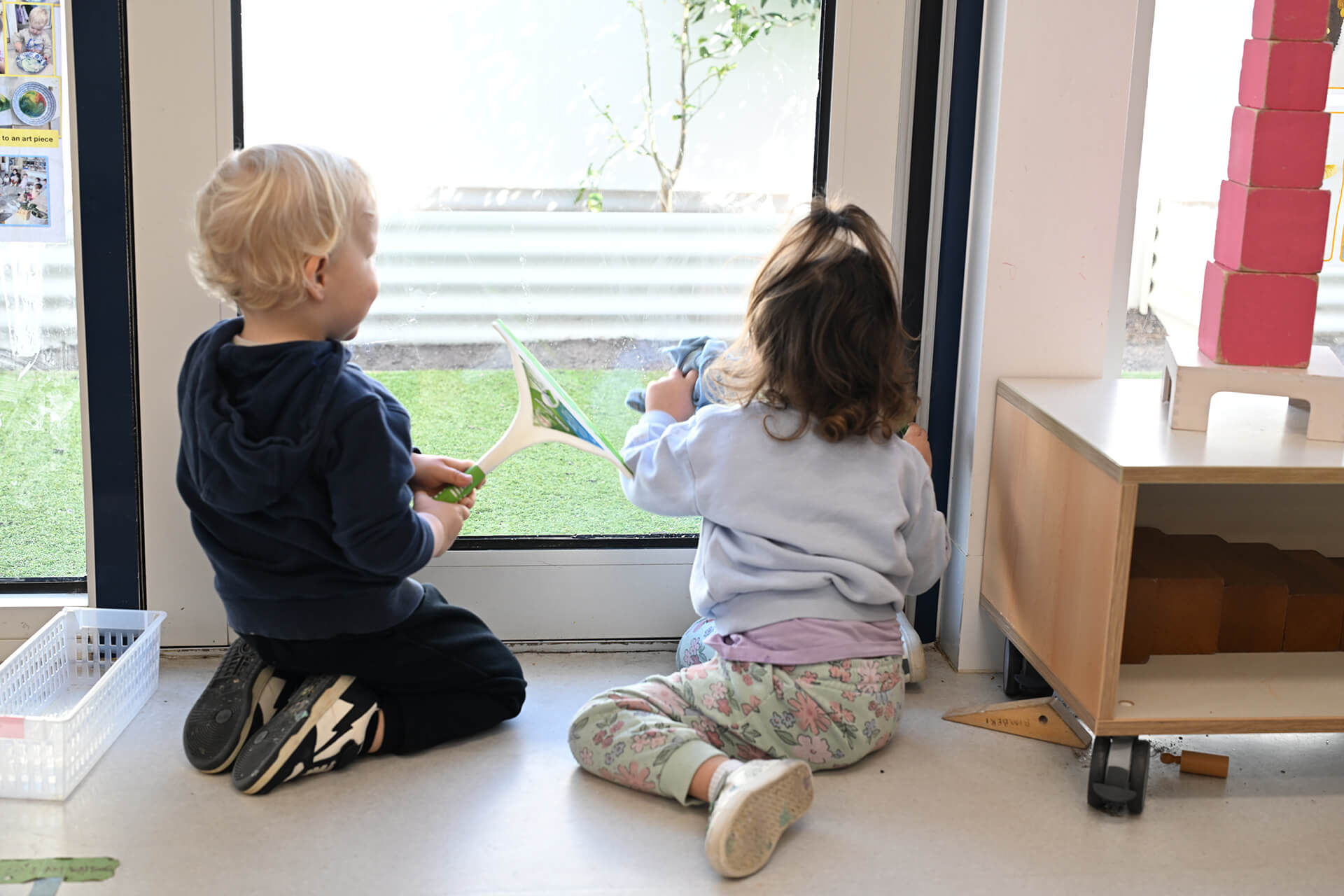
The drive for autonomy
— Pouring at a child-sized practical life shelf.
Psychosocial

The drive for autonomy

Your two-year-old is working out a profound question: "Am I capable on my own?"

How the adults around them respond shapes early confidence and self-reliance. Children met with patience develop a quiet trust in themselves.

What you'll notice at home
The proud, almost startled face the first time they put on their own shoes. "Me do it" replacing "you do it." Less help wanted at bath time. More mess.

From doing to thinking
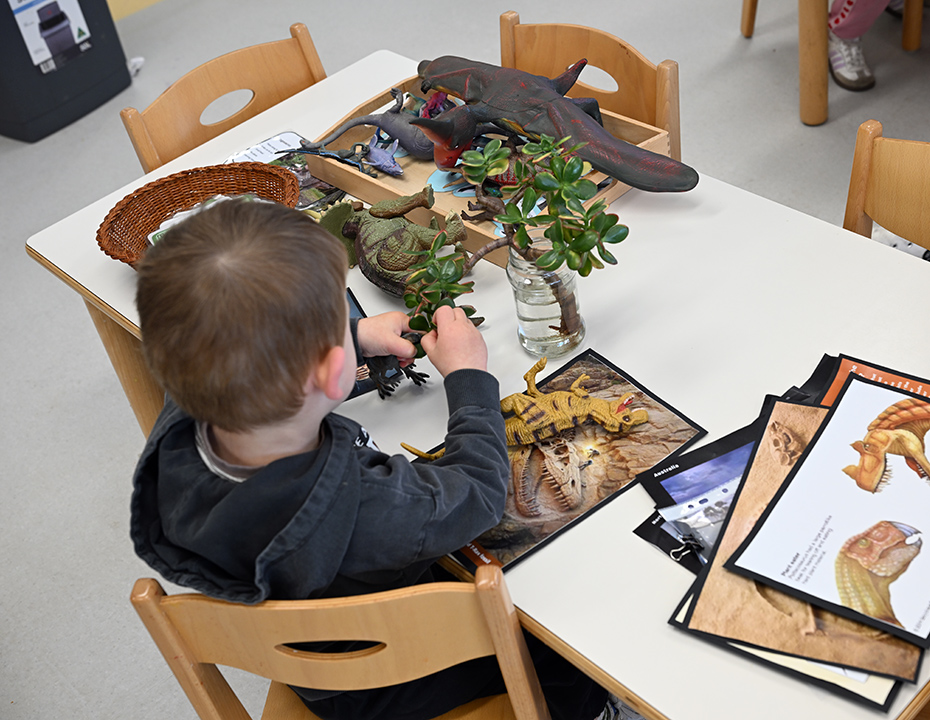
— A self-chosen sorting work, repeated until satisfied.
Cognitive

From doing to thinking

Late in the second year, something quietly remarkable happens: thinking steps out of the body and into the mind.

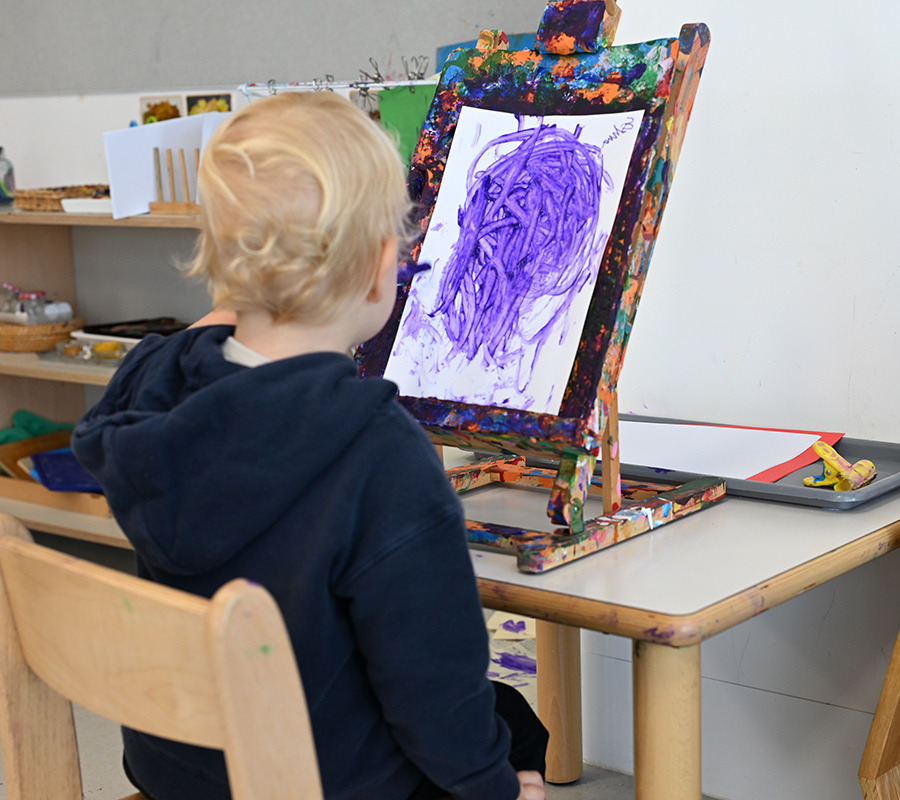
Children begin to pretend, to use one object to stand for another, to remember sequences and follow simple plans. Open-ended materials and uninterrupted work cycles let young thinking practise, repeat, and refine itself.

What you'll notice at home
A wooden block becomes a phone. A tea towel becomes a baby's blanket. They want to read the same book three times in a row — and notice if you skip a page.
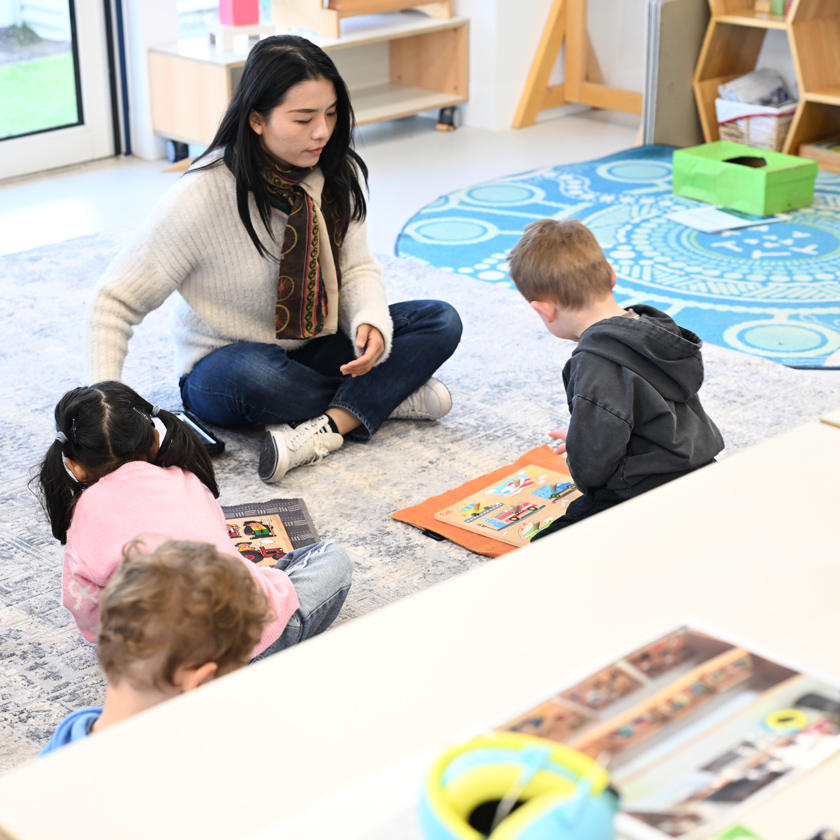

The vocabulary explosion
— Reading together, named objects, real conversation.
Language

The vocabulary explosion

Between roughly twenty-four and thirty-six months, the average child moves from short phrases to full, complex sentences.

Real conversation — not background noise — strongly supports growing vocabulary. So we talk. Educators name objects precisely, narrate routines, sing, read aloud, and engage in long back-and-forth conversation. Language isn't a session in the schedule; it's the fabric of the day.

What you'll notice at home
New words every week, then new sentences. Sudden questions. The first time they describe what happened earlier today, in the right order. The phrase you didn't know they'd remember.
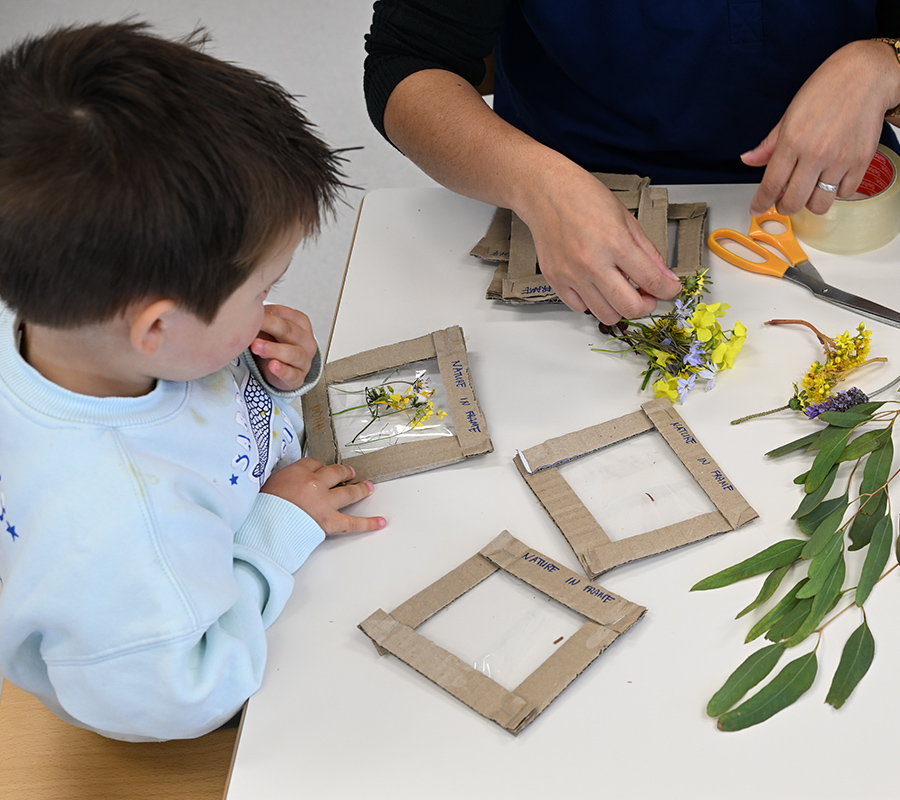

Big feelings, small bodies
— Co-regulation: calm presence at the child's level.
Social & Emotional

Big feelings, small bodies

Tantrums, "no," and powerful preferences are not misbehaviour. They are evidence of a child building a self.

Two-year-olds feel their feelings intensely, and don't yet have the brain architecture to regulate them alone. They borrow ours. Educators stay close, name what they see, and offer simple choices. We let the feeling pass — and we stay.

What you'll notice at home
The cup is the wrong colour. The sock has a seam. The whole world ends. And, an hour later, they're laughing again. This is exactly right.

III. What families tell us they notice

Three quiet shifts, often in the first few months.


Outcomes vary from child to child, and every child develops at their own pace. But these are the small changes families most often mention.

i.

A growing concentration

The ability to settle into one piece of work and stay there, on their own, for longer than you might expect a two-year-old can. It's the foundation of everything that comes after.
ii.

A quiet competence

Pouring their own drink without spilling. Hanging up their own bag. Knowing where their shoes go. The small autonomies that change the texture of everyday family life.
iii.

A richer way of speaking

Not just more words, but more interesting ones. Precise nouns. Real conversations. The first time they describe their day to a grandparent in a way that surprises everyone.
IV. The room itself

A space designed by adults, for the way a two-year-old actually moves.

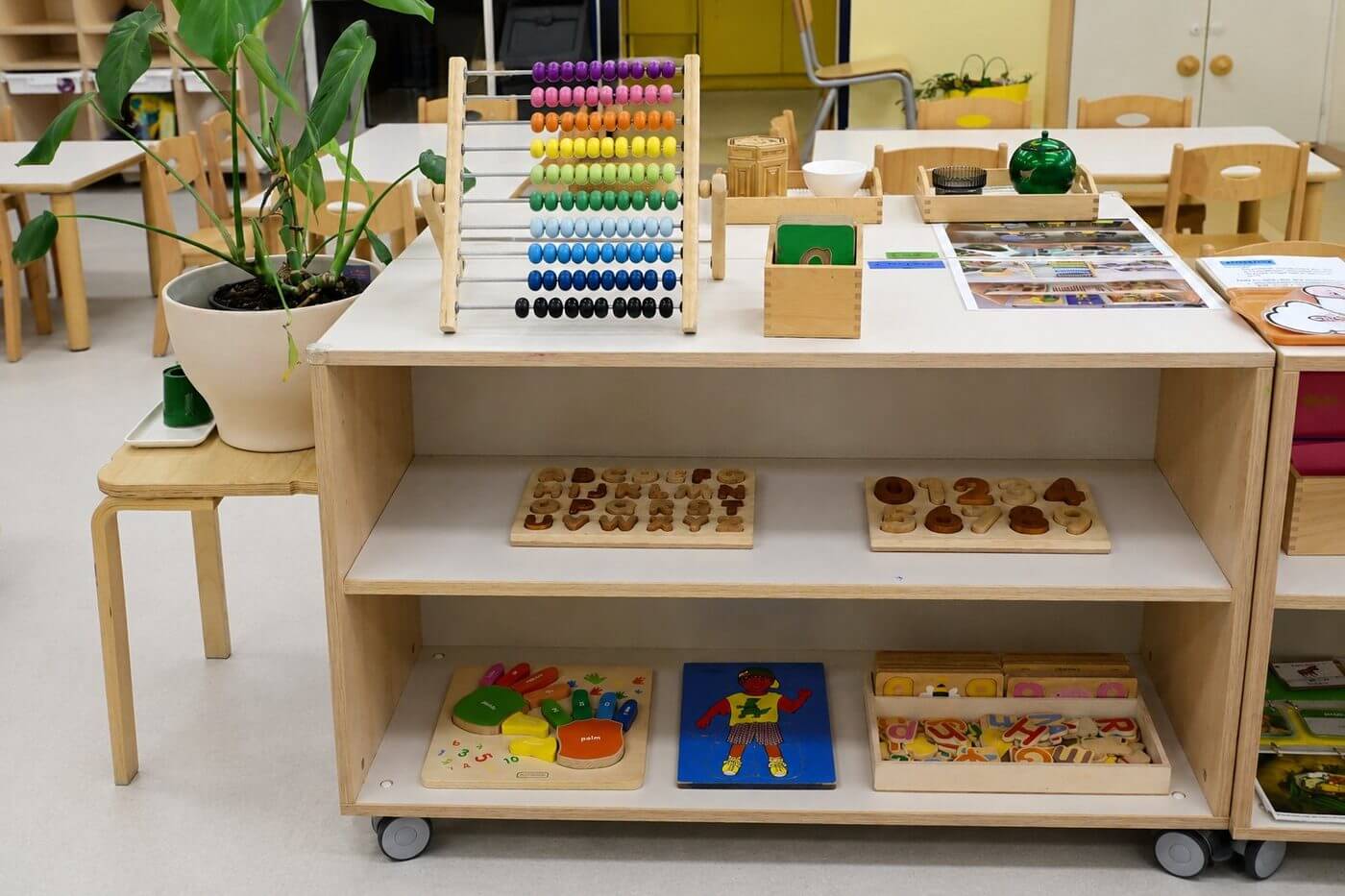
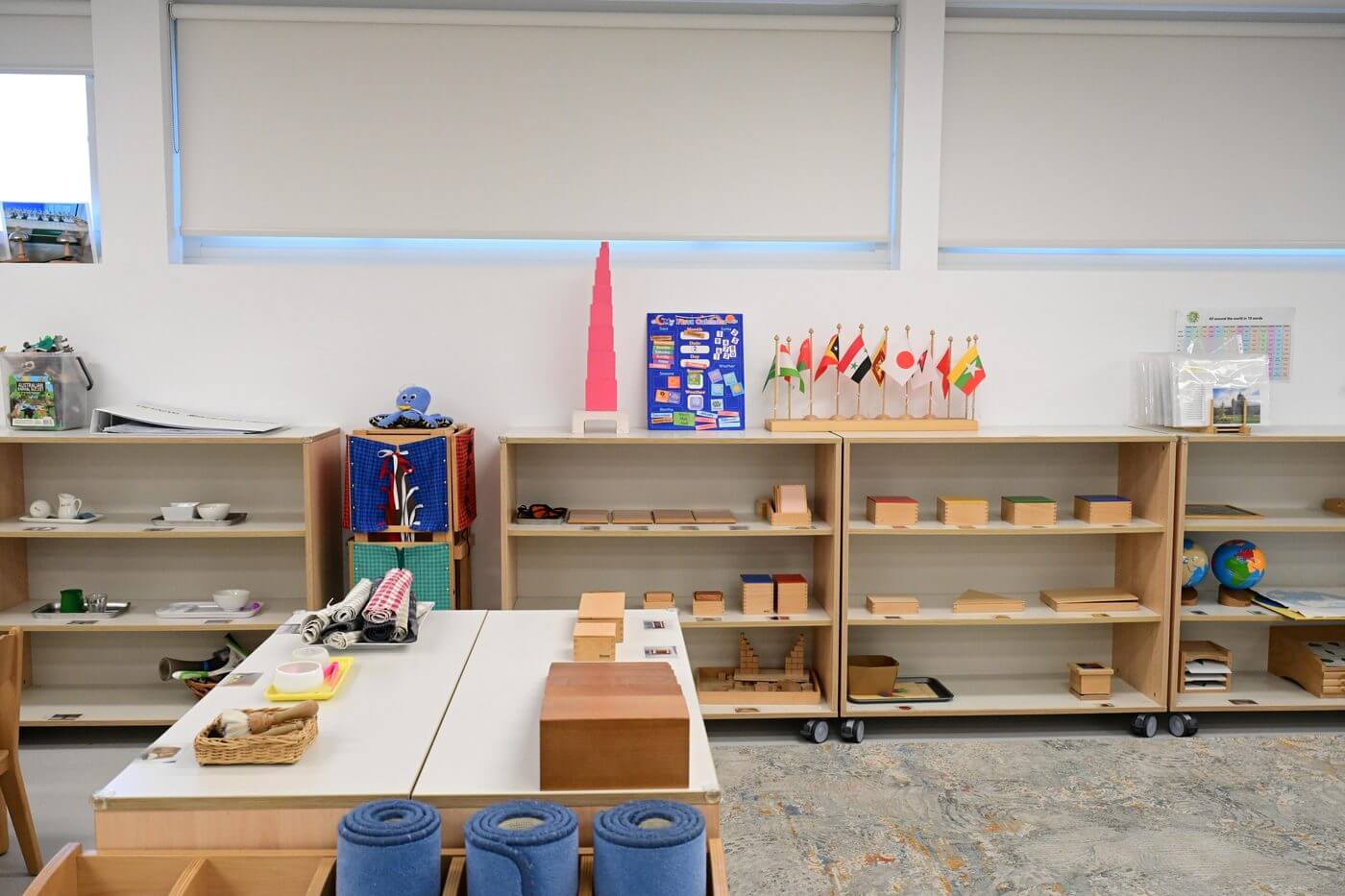
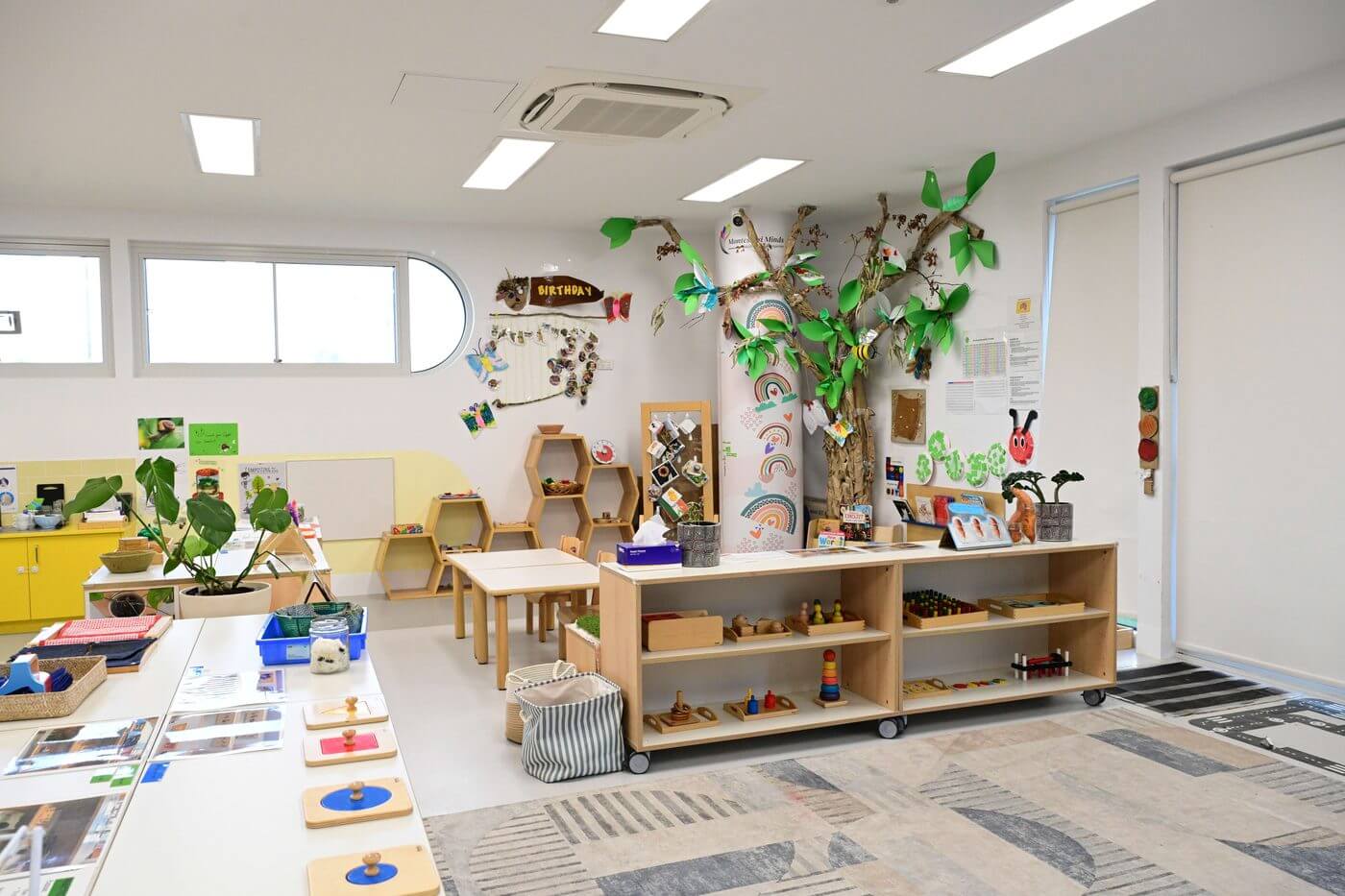
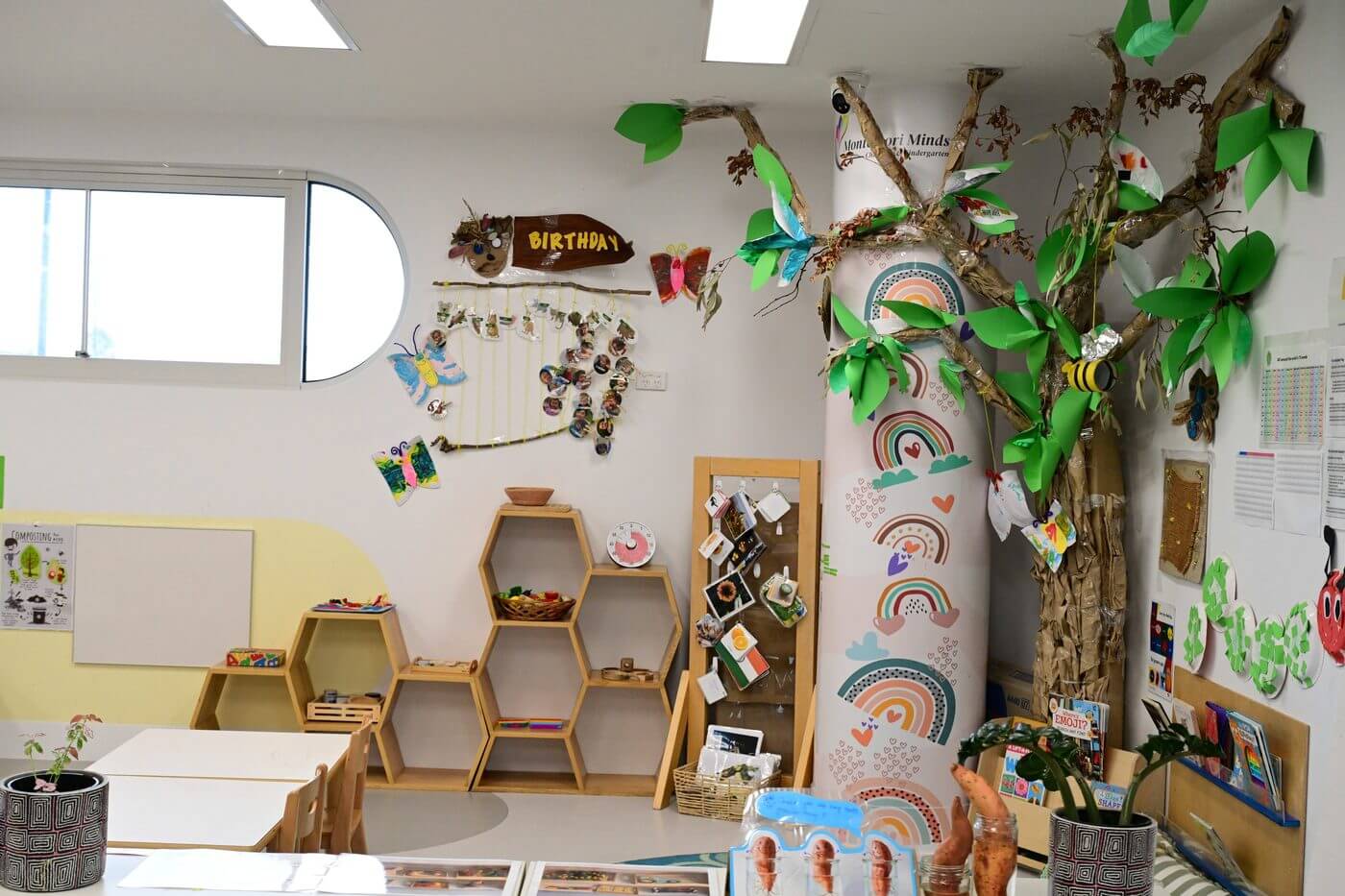
Our purpose-built Toddlers room sits on Princes Highway in Norlane — a few minutes from Bell Park, Hamlyn Heights, North Geelong and Corio. Walk in and the first thing you notice is what isn't there. No fluorescent plastic. No bins of bright primary toys. The room is calm, ordered, beautifully scaled. Low shelves hold a carefully chosen selection of real materials — wood, glass, ceramic — because real things feel different in the hand, and toddlers are hands.

Low, child-sized shelves
So your child can choose, carry, use and return work without help.
Real materials over plastic
Glass, ceramic and wood — natural weight, natural texture.
One of each piece of work
Encouraging waiting, watching, and the early skill of patience.
A garden, every day
Climbing, digging, watering — outdoor learning in every season.
A predictable daily rhythm
Order in the day is order in the mind for a two-year-old.
V. Beginning gently

Settling in — slowly, kindly, at your child's pace.


That first morning is big for your child. It's also a big morning for you — the doubt at the gate, the walk back to the car a little too quickly, the phone in your hand all day. We've stood with many parents through that morning, and we don't take it lightly.

Settling in is gentle and gradual. We'll meet you both before the start date, you'll stay for the first short visits, and we'll step back as your child is ready. Some children settle in a week. Some take a month. Both are completely normal. You'll receive daily updates, a real conversation at pick-up — and you can always call, check in, or come back early.

VI. Honest answers

The questions we hear most on tours.

The 2–3 stage brings its own particular set of parent questions. Here's how we approach them.

What about toilet learning?

We follow your child's individual readiness signs and partner with you on a calm, respectful approach. There's no fixed timeline — children are ready when they're ready, and educators support with practical clothing choices and predictable routines so it feels like a natural extension of self-care.
My child is going through a big 'no' phase.

Healthy and developmentally expected. We see "no" as the sound of a child working out who they are. Educators offer simple, real choices ("the red jacket or the blue one?"), name feelings, and protect the child's dignity — so children can practise autonomy without being shut down for it.
Isn't the Montessori approach a bit strict?

The opposite is closer to the truth. The environment is highly ordered, but the child's choice within it is wide. A toddler decides what work to do, how long to spend on it, and whether to repeat it. Educators observe far more than they direct.
Will my child be ready for kinder afterwards?

Our program supports many of the foundations parents associate with school readiness — concentration, independence, language, social skills. Outcomes vary from child to child, and our continuous 2–3 → 3–6 pathway means transition into our Kindergarten room tends to feel familiar rather than disruptive.
VII. A continuous pathway

From six weeks to six years, in one consistent environment.

Children at Montessori Minds can stay with us through three carefully designed stages — each one prepared for the way the child is changing.

Stage One

6 weeks – 2 years

Babies

A peaceful, sensory-rich environment that supports secure attachment, freedom of movement, and the foundations of language.

Explore Babies
You are here

2 – 3 years

Toddlers

The age of independence, language and big feelings — supported by real work, rich conversation and a calm, consistent rhythm.

Book a Tour
Stage Three

3 – 6 years

Kindergarten

A mixed-age Montessori community where children dive deeper into language, mathematics, culture, and the wider world.

Explore Kindergarten
VIII. Frequently asked

What families ask before enrolling.

Come and see it in person

Experience our curriculum in action


The best way to understand our approach is to step inside and see it for yourself. We warmly invite you to visit Montessori Minds and watch children at work in their prepared environment.

Enquire Admission
Programs at Montessori Minds Childcare & Kindergarten in are delivered in accordance with the National Quality Framework, the National Quality Standard and the Victorian Early Years Learning and Development Framework (VEYLDF). Every child develops at their own pace, and outcomes vary between individuals. Free Kinder funding amounts, Child Care Subsidy entitlements and the 3-Day Guarantee are administered by the Victorian and Australian Governments and may change — we will confirm your specific entitlement during enrolment. Information on this page is current as of the date of publication.