

At a glance
- What: a reptile incursion with Leo from Reptile Encounters
- Where: Montessori Minds Geelong, 21–29 Princes Highway, Norlane
- When: October 2026, as part of our 3rd birthday celebrations
- Who met: a shingleback lizard, a green tree frog, a Murray River turtle, a spiny leaf stick insect, a woma python, an olive python and a young saltwater crocodile
- Learning links: all five Early Years Learning Framework (EYLF) outcomes
Like the best learning, it started with one curious question.
How the seed was planted
One morning, one of our educators was chatting with a small group of children about dinosaurs. Big ones, small ones, ones with spikes and ones with long, long necks.
Before long, the conversation wandered somewhere new. Did you know that dinosaurs were reptiles? And that lizards, snakes, turtles and crocodiles are reptiles too?
Eyes went wide. Then came the question every educator secretly hopes for.
“Can we see a real dinosaur?”
Our educator gently explained that dinosaurs are extinct. They lived a very, very long time ago, long before any of us were born. There was a little pause while everyone thought about that.
Then one small voice asked, “Well… can we see a real reptile?”
From a question to a plan
In Montessori, we follow the child. When children are this curious, we listen.
So our educators went looking for a reptile incursion and found Leo from Reptile Encounters. The timing could not have been better. Our 3rd birthday was coming up, with the theme All Under One Umbrella. What better way to celebrate than to welcome some very unusual guests under our umbrella too?
The countdown begins
Once the children heard reptiles were really coming, the questions didn’t stop.
- “Who’s coming?”
- “Is a crocodile coming? A big one?”
- “Is it tomorrow? Is it after my sleep?”
- “Will the snake bring its babies?”
- “Do lizards have teeth?”
- “What do they eat for lunch?”
Every question was a little window into how their minds were growing. They were wondering, predicting and imagining, all before a single box was opened.
Families join in
When we asked for parents’ consent, something lovely happened. The excitement didn’t stay at the centre. Some parents caught the reptile bug too and asked how they could be part of it.
Curiosity, it turns out, is contagious.
The big day
When Leo from Reptile Encounters finally walked in carrying a stack of mysterious boxes, the children from our Bimberi room onwards gathered in a circle. Knees were tucked and eyes were wide.
One child couldn’t wait a second longer. “Is it a dinosaur?”
Leo smiled. “Not quite. But the next best thing.”
He lifted the first lid, and the whole room went quiet.
Meet our scaly (and not-so-scaly) guests
The shingleback lizard: “Where’s his face?”
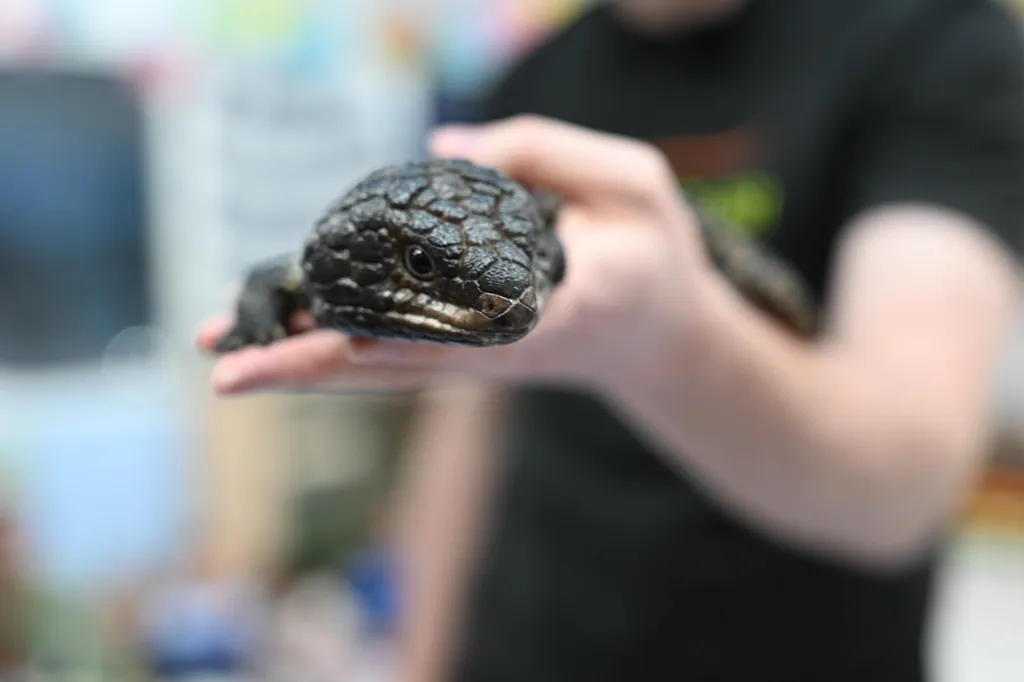
Our first visitor was a shingleback lizard. His chunky tail looks almost exactly like his head. That’s a clever trick to confuse predators, and it fooled a few of us too.
The children were amazed to learn that shinglebacks often stay with the same partner year after year. One little voice whispered, “Like my mummy and daddy?”
The green tree frog: “Why is he sticky?”
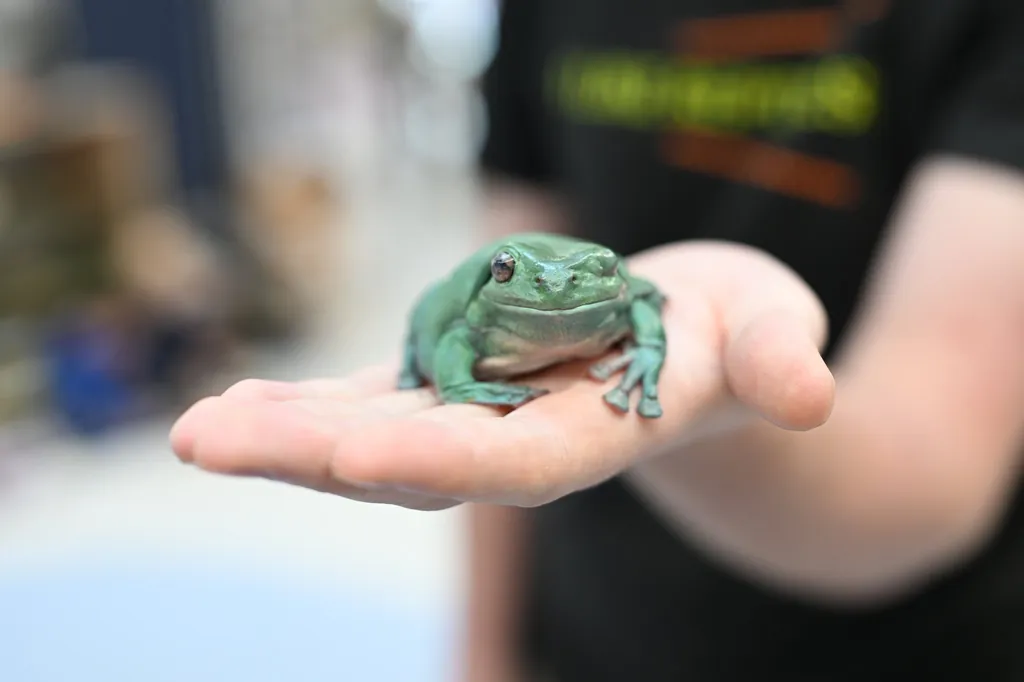
Next came a bright green tree frog with big round toe pads for climbing. Leo explained that frogs aren’t reptiles at all. They’re amphibians, and their skin needs to stay moist. That’s why frogs feel cool and smooth while reptiles feel dry and scaly.
It was a lovely surprise for little hands expecting “slimy”.
The Murray River turtle: “Is that his house?”
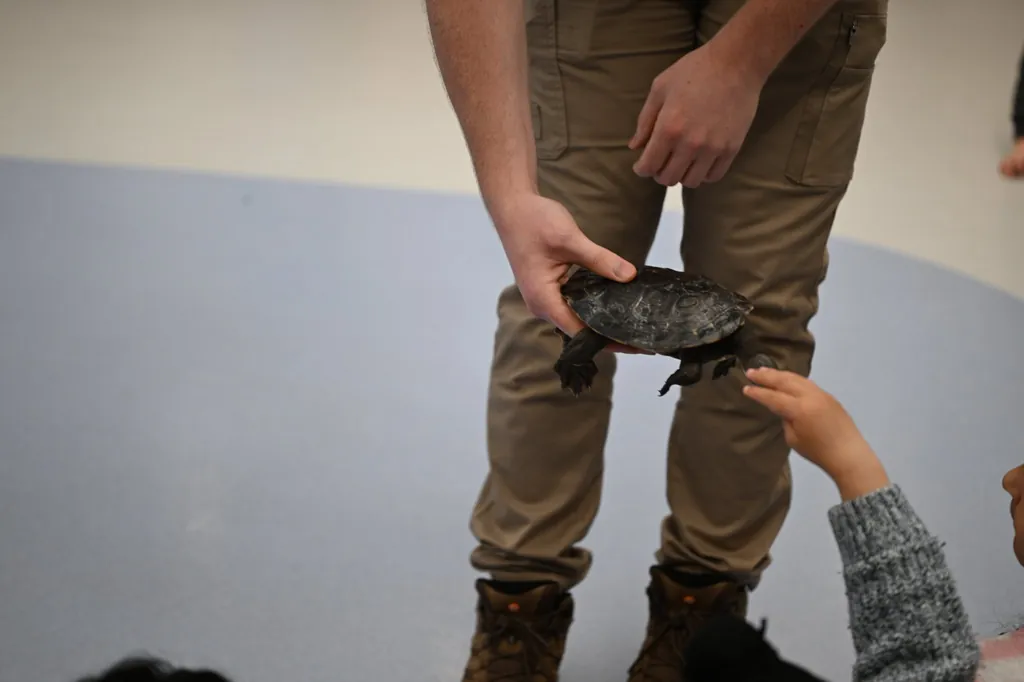
This was one of the most popular questions of the day. The answer surprised everyone: a turtle’s shell isn’t a house it can climb out of. It’s part of its body, joined to its backbone.
The children craned in to see his head tuck in and pop back out.
The spiny leaf stick insect: the guest who wasn’t a reptile
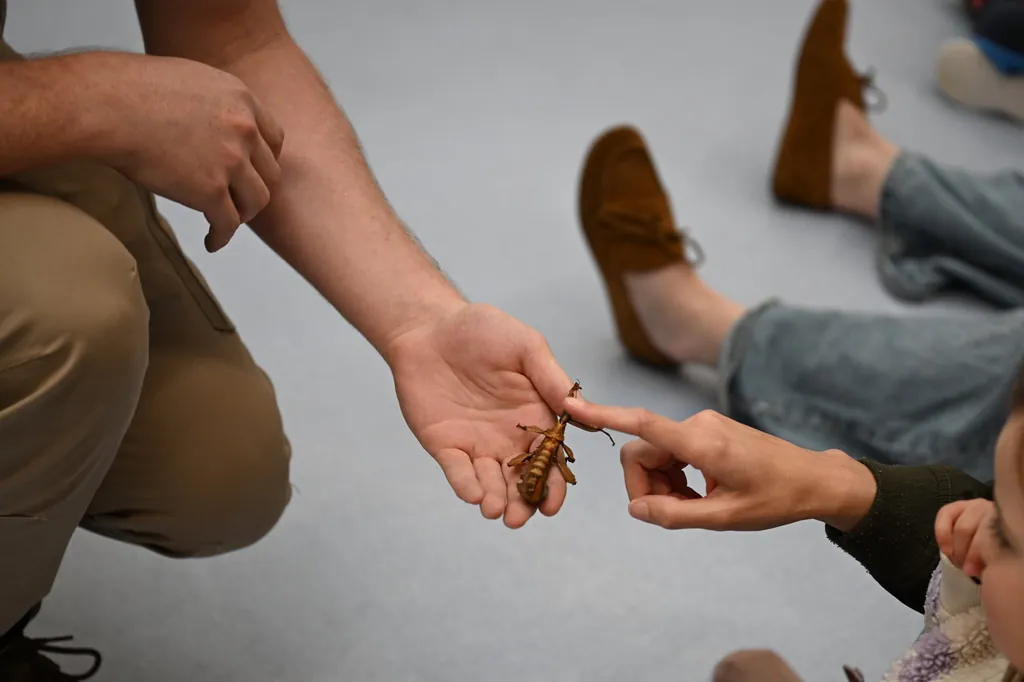
Then came a twist. Leo held up what looked like a handful of dry leaves… and it moved!
The spiny leaf stick insect is a master of camouflage. The children counted its legs (six!) and worked out that it’s an insect, not a reptile. That’s a big discovery for a three-year-old.
The woma python: “Does he have feet?”
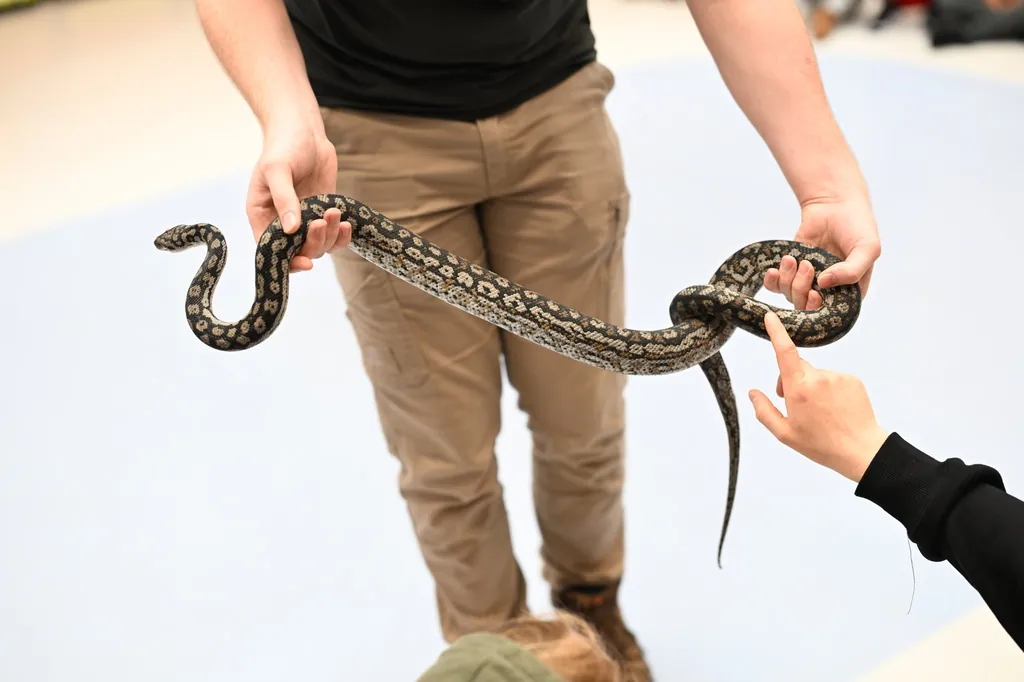
The woma python is a gentle snake with beautiful bands of colour. It has no venom and no feet. It moves by rippling its muscles along the ground.
“Is he hungry?” asked one child, taking a careful step back. Leo reassured everyone that he’d already had his lunch.
The olive python: “How long is he?”
The olive python is one of Australia’s biggest snakes, and the children’s arms stretched wider and wider trying to show how long he was.
Some were completely mesmerised. Others watched from a little further away, which was perfectly okay.
The saltwater crocodile: the grand finale
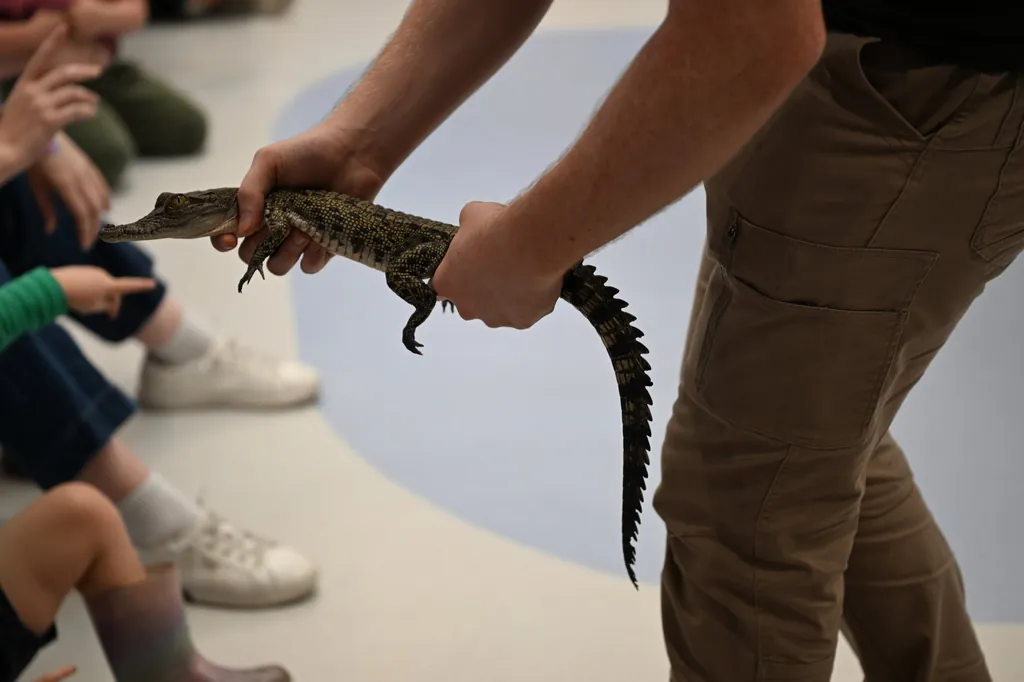
Leo saved the best until last: a young saltwater crocodile.
Saltwater crocodiles grow into the largest reptiles on Earth. For now, this little one was calm and still, and every child leaned in to see.
“Where’s his mummy?”
“Can he eat a whole car?”
(Not today, we promise.)
Brave faces and big feelings
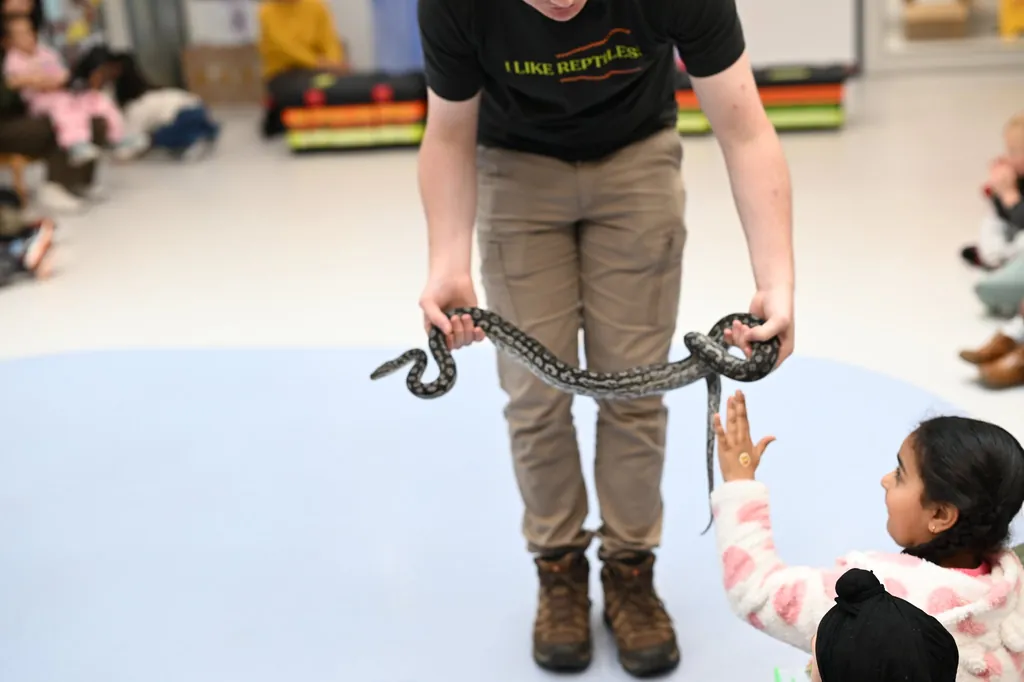
Not every child wanted to get close, and that’s okay. We respected each child’s wishes.
Some children were fascinated from the first moment. Others felt nervous, especially when the snakes came out. They watched from a comfortable spot beside an educator or held a friend’s hand.
In Montessori we follow the child. Nobody was pushed, and every feeling was welcome. By the end, more than a few children who started at the back of the circle had shuffled forward for a closer look. Watching that kind of quiet courage grow is one of our favourite parts of the job.
Safety first, always
Child safety guides everything we do, including our incursions.
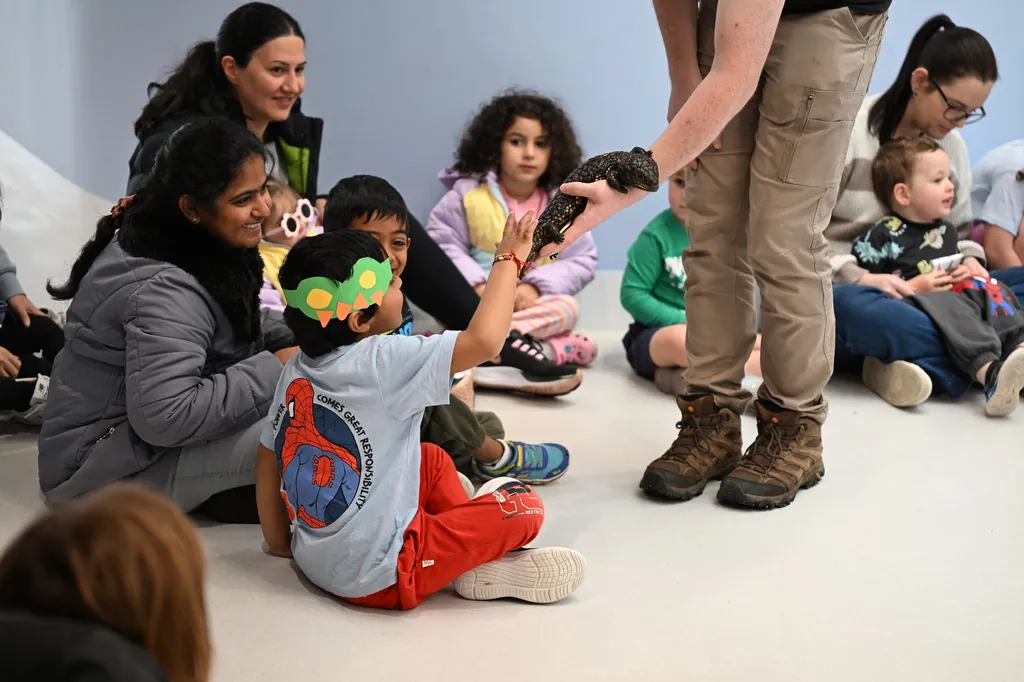
Only Leo held the animals, and the children never picked them up. When it was time to say hello, children were invited to gently pat each animal while Leo held it, with our educators right beside them.
It’s one example of how we look at every experience through a child-safe lens. Exciting learning and careful supervision go hand in hand.
What our children learned: the 5 EYLF outcomes
A picture of a crocodile is interesting. A real crocodile, sitting quietly in front of you, is unforgettable. Here is how one morning with Leo connected to all five learning outcomes of the Early Years Learning Framework.
1. Children have a strong sense of identity
Every child met the reptiles in their own way. Some leaned in straight away, while others watched from beside an educator until they felt ready. Choosing when to be brave, and being respected for that choice, helps children trust who they are.
2. Children are connected with and contribute to their world
Nearly every animal Leo brought is an Australian native, from the Murray River turtle to the saltwater crocodile. Children learned where these animals live, what they eat and why they need our care. It was a first step towards looking after the world around them.
3. Children have a strong sense of wellbeing
Big feelings were welcome, from wild excitement to a little fear. Clear safety rules helped too: only Leo held the animals, and children gave gentle pats with educators beside them. Knowing they were safe let children relax and enjoy the moment.
4. Children are confident and involved learners
This whole incursion began with a child’s question. Children wondered, predicted (“Is a crocodile coming?”) and then discovered the answers for themselves. Back in class they kept going, sorting animals into reptiles, amphibians and insects.
5. Children are effective communicators
New words became part of everyday chatter: reptile, amphibian, camouflage, scales. Children asked questions, listened to Leo’s answers and couldn’t wait to retell the story at home.
The Montessori lens: how children learn about living things
In a Montessori classroom, learning moves from the real to the abstract. Children meet the real thing first and then explore it through hands-on materials.
Our reptile visit is the perfect springboard. Back in our prepared environments, the learning can keep going:
- Classification work. Sorting living and non-living things, then exploring which animals are reptiles, amphibians or insects (just like our stick-insect surprise).
- Three-part cards. Matching pictures and names of the animals children met.
- Care of living things. A key part of practical life, where children learn responsibility by caring for plants and our natural environment.
- Art and storytelling. Drawing, retelling and imagining their favourite moments.
This is the heart of Montessori education: real experiences, curious children and plenty of time to explore.
Thinking about kinder in 2027?
If you’d love your child to learn through real-world experiences like this, we’d love to meet you.
Montessori Minds offers Montessori childcare and kindergarten in Geelong, with programs that follow each child’s curiosity, from their very first steps through to school readiness. Now is a great time to start the conversation about kinder in 2027.
Book a tour or call us on (03) 5222 8135 to visit our centre. Who knows what might come out of the next mysterious box?
A big thank you to Leo from Reptile Encounters for an unforgettable morning.
Frequently asked questions
What is a reptile incursion?
An incursion is a learning experience brought into the centre. For ours, Leo from Reptile Encounters visited Montessori Minds Geelong with animals that were nearly all Australian natives, so children could meet them up close in a familiar, safe space.
Did the children hold the animals?
No. Only Leo held the animals. Children were invited to gently pat each animal while Leo held it, with our educators right beside them, and children who preferred to watch from further away were welcome to.
Why did Montessori Minds organise a reptile incursion?
It began with the children’s own question during a conversation about dinosaurs: “Can we see a real reptile?” In Montessori we follow the child, so our educators found a way to bring that curiosity to life.
How did the incursion connect to the Early Years Learning Framework?
The visit connected to all five EYLF learning outcomes, and the learning continued back in our prepared environments through classification work, three-part cards, care of living things, art and storytelling.
How can we visit Montessori Minds Geelong?
You can book a tour online or call (03) 5222 8135. We are at 21–29 Princes Highway, Norlane, and open Monday to Friday, 7am to 6pm.