

How Children’s Book Week 2026 ran in our rooms: ceilings full of hand-cut characters, a costume day nobody had to buy anything for, and families reading aloud beside their children.
22–28 AugChildren’s Book Week 2026, run nationally by the CBCA
Symphony of StoriesThe 2026 national theme, illustrated by Briony Stewart
60+Nationalities in the Montessori Minds family
12 mths – 6 yrsEvery room took part, from Babies to Kindergarten
Quick answer
Children’s Book Week is Australia’s national celebration of reading, organised each year by the Children’s Book Council of Australia. In 2026 it ran from Saturday 22 August to Friday 28 August, with the theme Symphony of Stories. 2026 also marked 80 years of the CBCA Book of the Year Awards.
At Montessori Minds in Norlane, the week included children-made decorations across the centre, a costume day for children and educators, families invited in to read aloud in English and in their home languages, and a book swap so every child took a story home. Dressing up was optional, and no child missed out because a costume was not possible.
Where21–29 Princes Highway, Norlane (North Geelong) VIC 3214
RoomsBabies · Toddlers · Kindergarten 3–6
HoursMon–Fri, 7:00 am – 6:00 pm, 52 weeks a year
Phone(03) 5222 8135
Book Week has a sound of its own. A three-year-old explains her costume to a toddler who has no idea who the character is and is delighted anyway. A parent’s voice carries across the room while the children lean in for the next page. Somebody asks, for the fourth time that morning, whether we can please read the caterpillar one again.
It is one of the few weeks when every room at Montessori Minds is doing the same thing at the same time: Babies, Toddlers and Kindergarten, along with the educators, the kitchen and the office. Below is how the week ran in our Norlane rooms, and why reading takes up so much space in a Montessori programme.
If you are a Geelong family choosing where your child will spend their early years, the way a centre treats books tells you a great deal. Reading with young children is one of the simplest and most researched things adults can do with them, and it costs nothing but attention.
What Children’s Book Week is
Children’s Book Week is run each year by the Children’s Book Council of Australia (CBCA), a not-for-profit that has championed Australian writing and illustrating for children since the 1940s. In 2026 it ran from Saturday 22 August to Friday 28 August, and the national theme was Symphony of Stories, with artwork created by award-winning author-illustrator Briony Stewart.
2026 was a milestone year: the CBCA Book of the Year Awards reached their eightieth year. The awards run across several categories, including a dedicated Early Childhood category for picture books aimed at our youngest readers. That shortlist makes a very good borrowing list for families with children under six.
Across the country, schools, libraries, kindergartens and long day care services mark the week with character dress-ups, story sessions, author and illustrator visits and classroom displays. Most services build the week around the dress-up day. We wanted the reading to carry at least as much weight as the costumes.
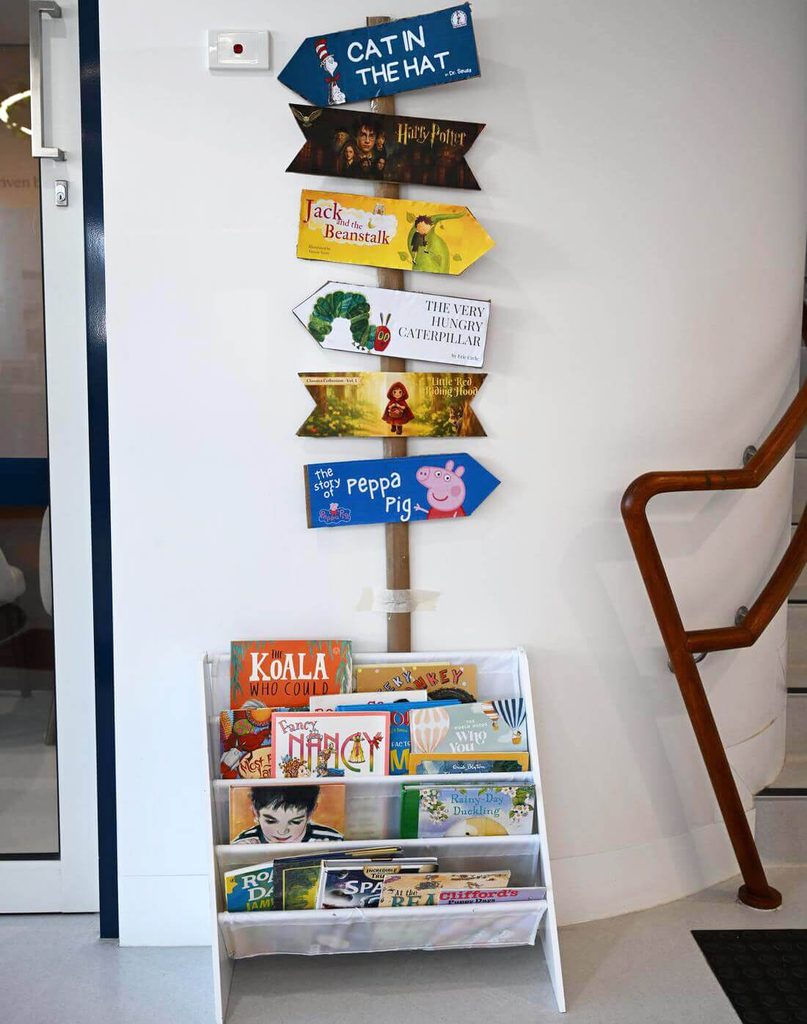
A tip for next year
Geelong Regional Libraries branches usually run free Book Week story sessions, and the CBCA shortlist is announced months before August. Borrowing three or four shortlisted picture books in July is an easy, no-cost way to walk into the week already excited.
How the week ran at our Norlane centre
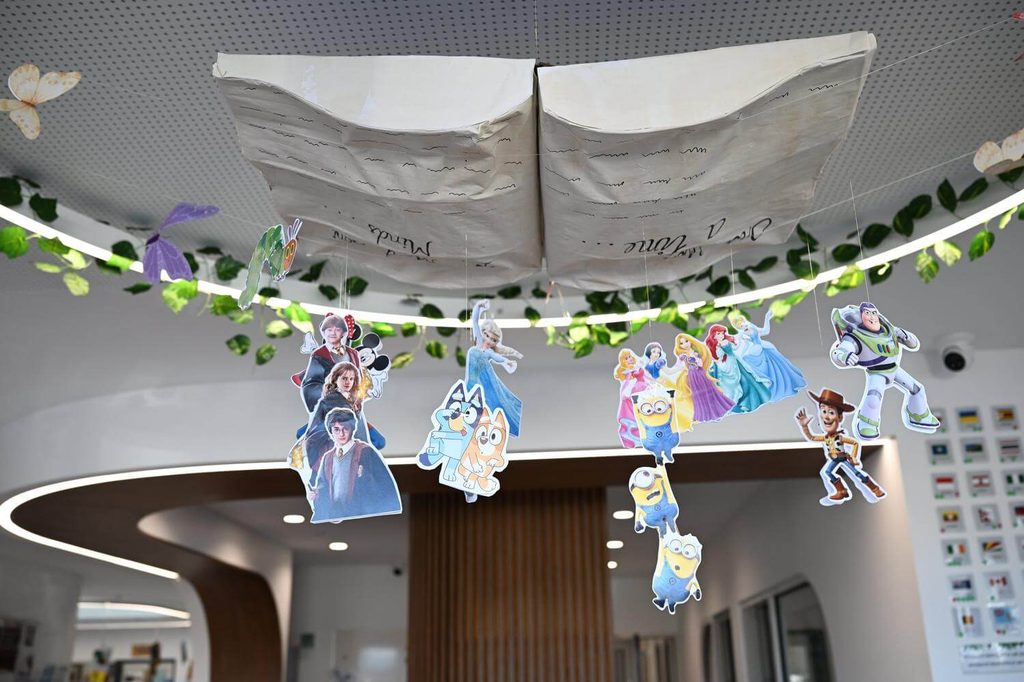
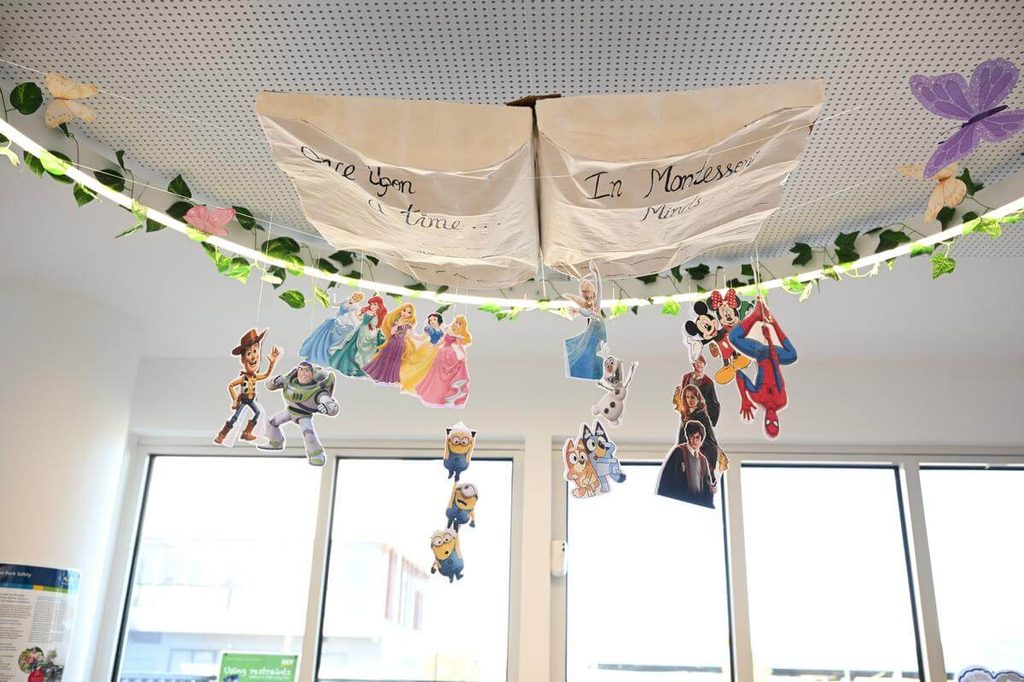
Preparation started well before Monday, and the children did most of it, which is how we prefer it. A child who helps make the display understands the display. An oversized open book went up under the foyer ceiling, hung with characters the children had cut out themselves. Paper vines and butterflies were threaded along the light rings. In the Kinder room, paper roses and hand-print leaves filled the tree on the back wall.
None of it was decoration for the sake of a photograph. Young children read an environment long before they read a word, and when the space says stories live here, they behave accordingly. They carry books over to adults. They retell plots to each other. Then they start inventing their own.
01
Children made the decorations
Cutting, painting, threading, hanging. The making was the learning, not the set-up for it.
02
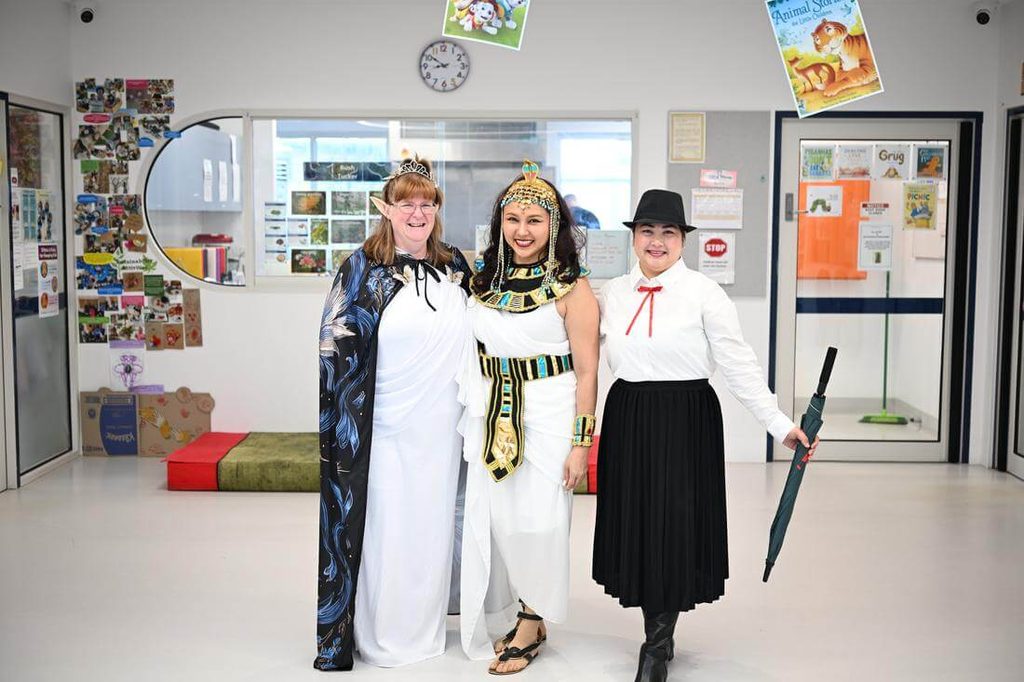
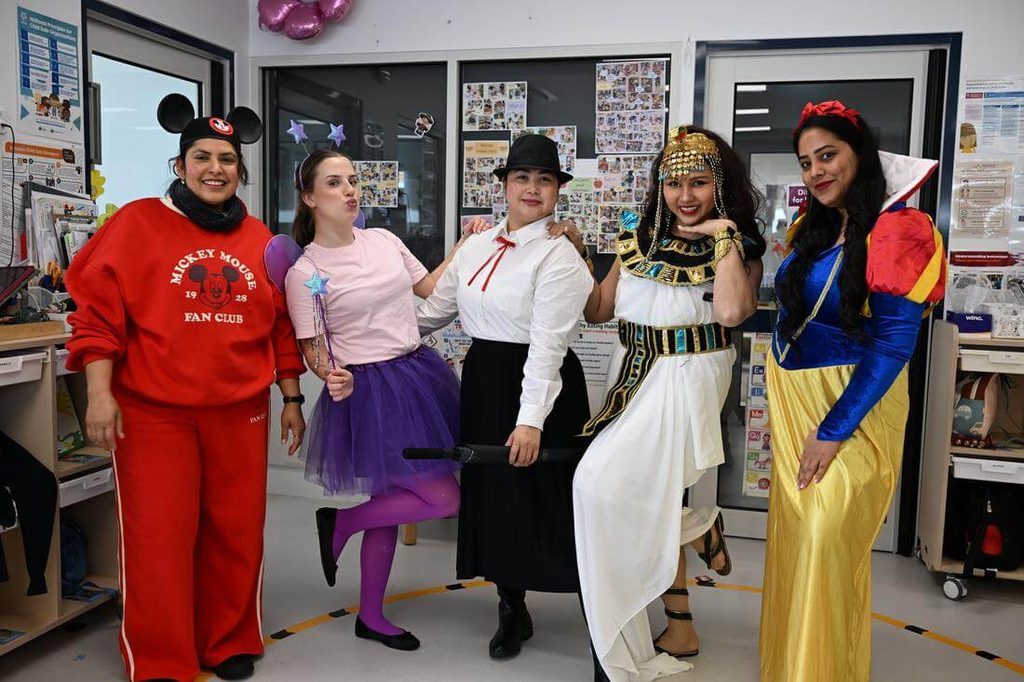
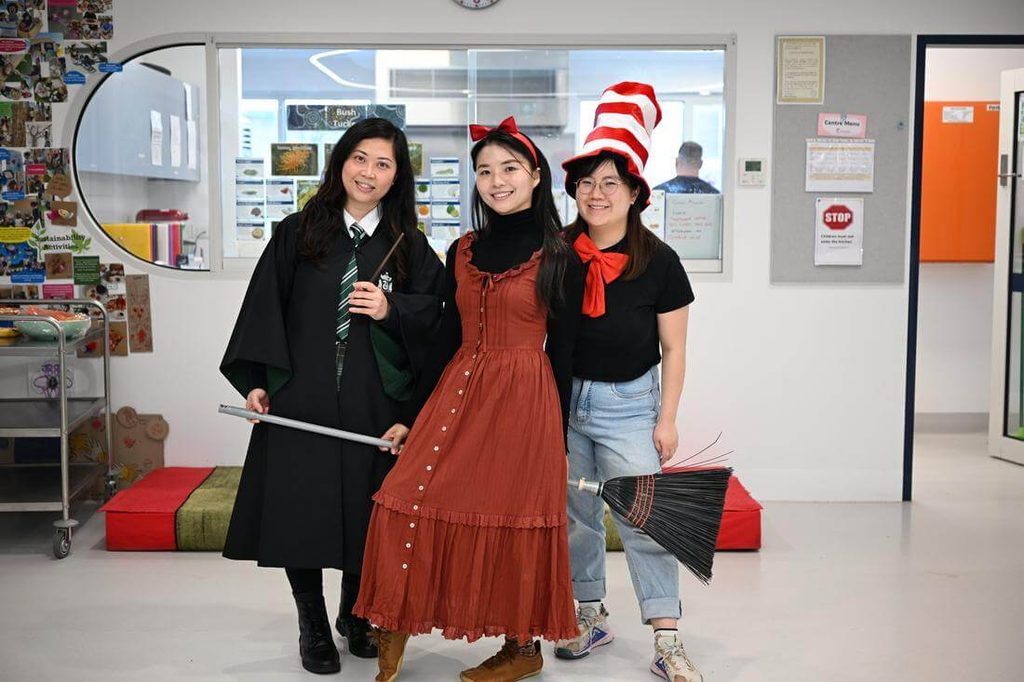
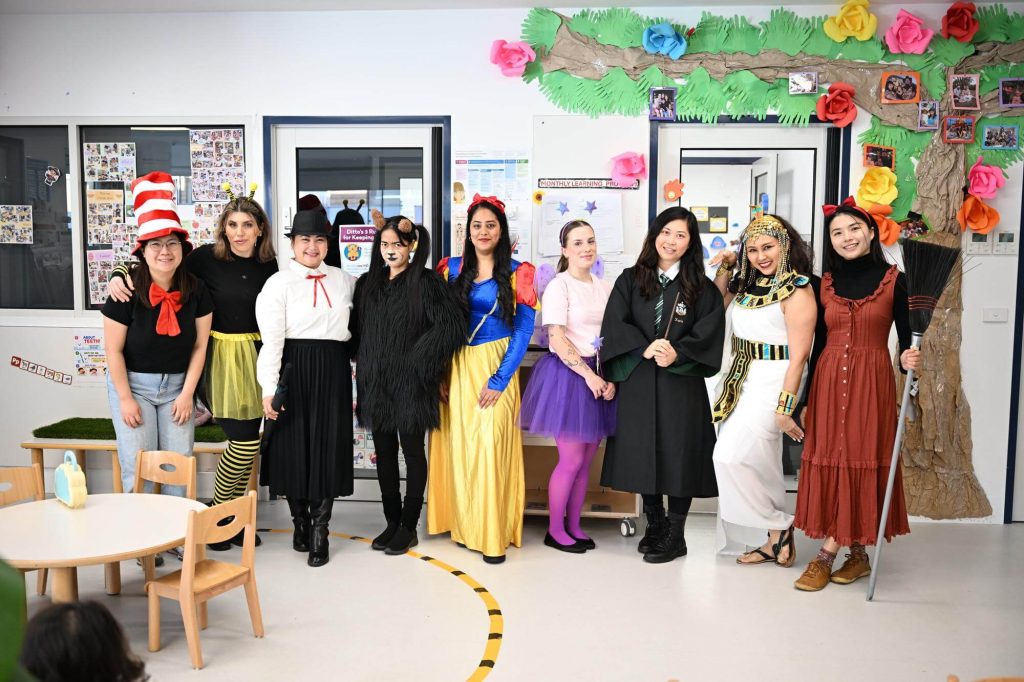
Costume day
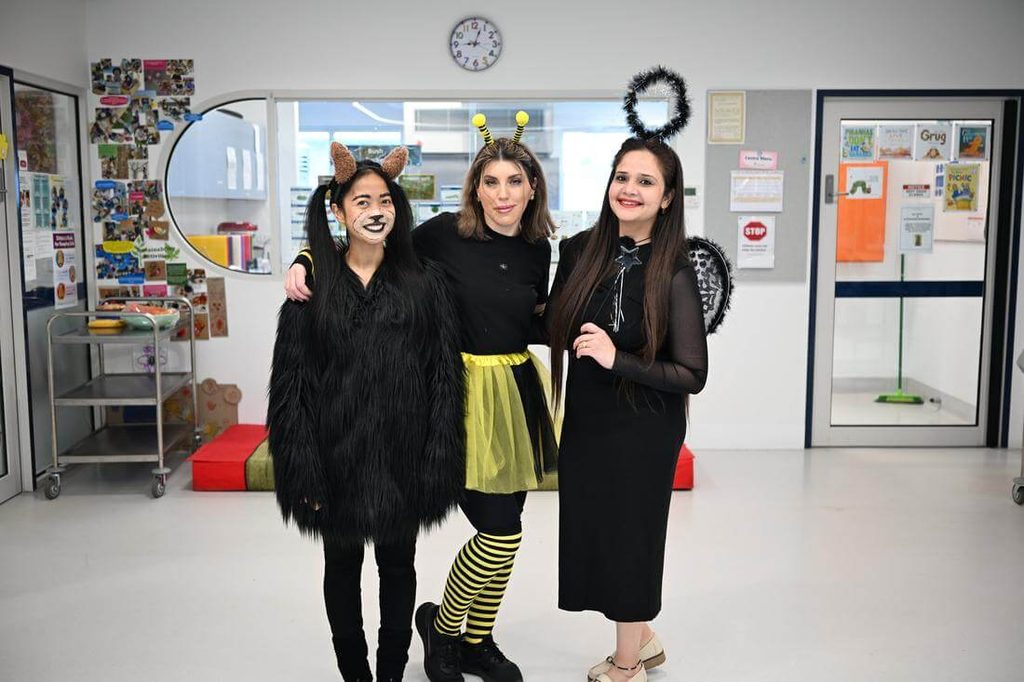
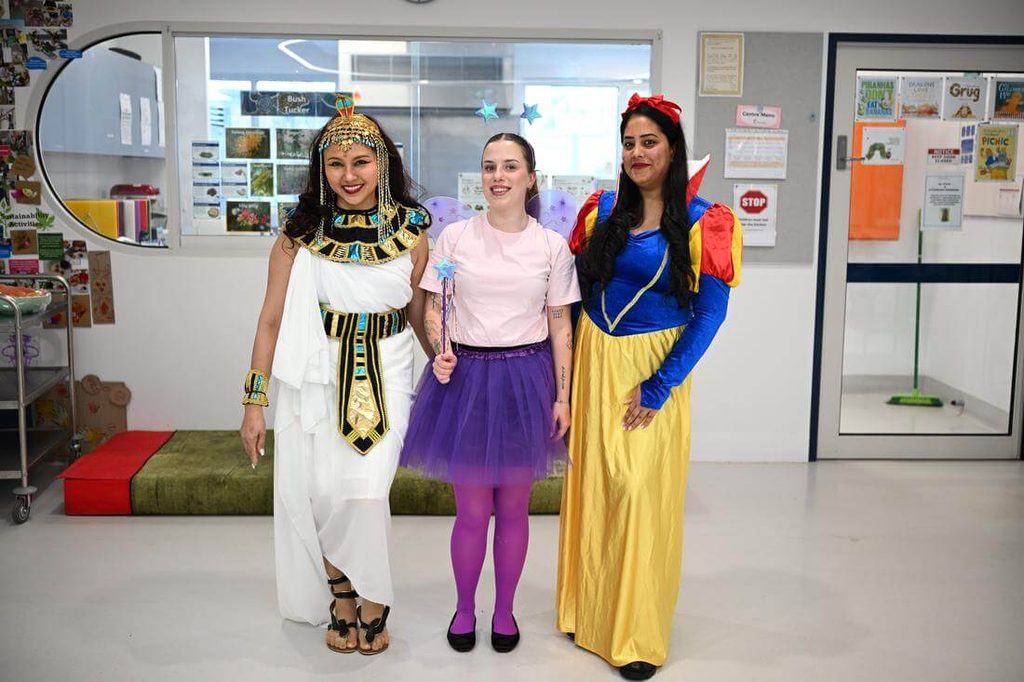
Children and educators came as characters from books they love. Optional, and we kept spares at the centre for anyone who needed one.
03
Families reading aloud
Parents and grandparents were invited in to read to a group, in English or in their home language.
04
Book swap and borrow
Bring one, borrow one. Every child went home with a story and nothing new had to be bought.
05
Story extensions in every room
Favourite books turned into cooking, painting, puppet play and outdoor games.
06
A gentle parade, not a competition
No prizes, no judging. Everyone walked, everyone was seen, then back to what they were doing.
Why reading aloud matters so much in the early years
Between birth and about six, children build the language system they will use for the rest of their lives. Vocabulary, sentence structure, the rhythm of storytelling, the understanding that marks on a page carry meaning. Most of it is laid down through conversation and shared reading rather than through formal instruction.
The Australian evidence here is unusually clear. A well-known study by Kalb and van Ours, using Longitudinal Study of Australian Children data and published through the Melbourne Institute, found that parents reading to children at ages four to five was positively and significantly associated with reading and broader cognitive skills, still measurable at ages ten and eleven, after accounting for family background. Frequency mattered. So did the simple act of an adult sitting down and doing it.
What research cannot tell you is what any individual child will do, and we will never suggest otherwise. Every child develops at their own pace, and early literacy shows up in very different ways. One child narrates whole plots at three. Another is still mostly listening at four, then reads comfortably at six. Both sit within the normal range. What we can say is that daily reading aloud supports language development, builds attention and vocabulary, and strengthens the relationship between the adult and the child doing it.
What “reading aloud” really means
It is not a performance. Pointing at pictures, naming things, pausing to let your child finish a familiar line, answering the same question twice, stopping halfway because they have lost interest. All of it counts. A five-minute book that gets talked about beats a twenty-minute book read at a wriggling child.
How a Montessori programme supports early language
Book Week sits comfortably inside a Montessori environment because language work happens in our rooms every day, in a deliberate sequence. Maria Montessori observed that young children absorb language from the world around them long before they can produce it. That puts a real responsibility on the adults in the room: the language on offer has to be accurate, unhurried and worth absorbing.
Oral language comes first
Before letters, before writing, before any talk of reading, children need words and the confidence to use them. In our rooms that means naming real objects precisely, singing, rhyming, storytelling without a book in hand, and educators who listen, which matters most of all. A conversation where an adult waits for a two-year-old to finish a slow sentence is language teaching, even though it looks like nothing much.
Sounds before letter names
Montessori classrooms introduce letters by their sound rather than their alphabet name, usually through sandpaper letters the child traces with two fingers while saying the sound. The child hears it, sees it and feels the shape of it at the same time. This multi-sensory approach is designed to support later writing and reading, and it is offered when an individual child shows interest rather than to a whole room on a timetable.
Writing often comes before reading
One of the things that surprises visiting parents most is that Montessori children frequently build words before they read them, using a moveable alphabet: loose letters a child can push into place to spell what they are thinking. It separates the physical difficulty of handwriting from the intellectual work of composing, so a child who cannot yet hold a pencil comfortably can still write a sentence.
Mixed ages do some of the teaching for us
In our 3–6 Kindergarten community, a five-year-old reading to a three-year-old is not a staged activity. It happens on its own, several times a day. The younger child gets a model within reach of their own ability. The older child consolidates a skill by using it for a real purpose, which is far more powerful than being tested on it.
Real books, carefully placed
Our shelves sit at child height, face out where possible, holding a small rotated selection rather than an overwhelming wall. Children choose their own book and return it themselves. The prepared environment does a quiet job here: when choosing and caring for a book is easy, children do both without being asked.
All of this sits within the Early Years Learning Framework, particularly Outcome 5, children are effective communicators, and the National Quality Standard’s expectations for educational programme and practice. Our funded kindergarten programme is delivered by a teacher registered with the Victorian Institute of Teaching, and learning is documented and shared with families through Storypark, so you can see what your child is actually engaging with rather than guessing from a costume photo.
Families reading in our rooms
Inviting families in to read was the part of the week we were least able to predict, and in the end valued most.
Our community includes families from more than sixty nationalities and educators from sixteen countries, and several parents chose to read in their first language. The children listening did not need to understand every word. They watched an adult they knew treating a book as something worth their full attention, in a language that sounded like home to at least one child in the circle. For that child, seeing their language given the floor in their own classroom does something for belonging that no display board can.
This is not a nice extra. Partnership with families sits at the centre of the National Quality Standard, and the home reading environment is consistently one of the strongest influences on early literacy. A centre that reads to your child all day and never talks to you about reading has done half the job.
An open invitation
You do not need to wait for Book Week. If you would like to come and read to your child’s group, in any language, for ten minutes, on any morning, speak to your room leader or contact the centre. Grandparents are very welcome, and are often the best readers in a family.
Costume day without the stress or the cost
Every Book Week, some families quietly dread the dress-up day. Costumes cost money, mornings are already tight, and nobody wants their child to be the one who feels out of place. Our position is simple: a costume should never be a barrier to a child joining in.
- Clothes you already own. A striped shirt, a red jumper, a pair of gumboots and a hat will cover dozens of picture-book characters.
- One item is a costume. A paper crown, cardboard ears, a drawn-on moustache. Children commit to the idea, not the production values.
- Comfort wins. Children play, eat, paint, climb and sleep here. Anything scratchy, tight, trailing on the ground or hard to remove for toileting will be abandoned by 9.30 am.
- Safety first. We ask families to avoid masks that restrict vision, long cords or ties near the neck, small detachable pieces for children under three, and face paint for children with sensitive skin or a known reaction.
- Opting out is completely fine. Some children find dress-ups genuinely unsettling. They take part in everything else and nobody comments — that is a deliberate choice on our part.
- We keep spares. If a costume is not possible at home for any reason, tell us and we will sort it out at the centre. No explanation needed.
One practical note on photographs. We take a lot of them during Book Week and share them with families through Storypark. Any image used publicly, whether on our website, in a newsletter or on social media, is only used where the family has given written consent, and consent can be withdrawn at any time. This sits alongside our wider commitments as a Child Safe Organisation.
Ten ways to keep the reading going at home
The most useful thing a centre can do after a week like this is hand something practical back to families. These are the suggestions we give most often to parents across Norlane, Corio, Bell Park, Lara and greater Geelong.
- Attach reading to something that already happens. After the bath, before the light goes off. It sticks far better than deciding to “read more”.
- Let them choose, even the same book. Repetition is how young children master language. The tenth reading is doing more work than the first.
- Talk more than you read. “What do you think he’ll do?” “Have you ever felt like that?” One book with conversation around it is worth three read straight through.
- Read in your strongest language. Strong first-language skills support later English, and your fluency is what your child is absorbing.
- Use the library. Geelong Regional Libraries membership is free and includes board books, picture books and school-holiday story sessions.
- Put books where children are. A low basket in the lounge room, a couple in the car, one in the nappy bag. Children read what they can reach.
- Say the sound, not the letter name. “Mmm” rather than “em”. It matches what we do in the classroom and makes blending words easier later.
- Tell stories without a book. Family stories, what happened at work, an invented story on the drive home. Oral storytelling builds the same muscles.
- Let them “read” to you. A three-year-old turning pages and inventing the words is reading in every sense that matters at three.
- Stop when they are done. Ten willing minutes beat thirty resented ones, every time.
One last reassurance. If some weeks you manage two nights out of seven, that is fine. Children are not built out of perfect routines. They are built out of ordinary, repeated, good-enough moments.
What carries on after Book Week
The decorations come down. The routines do not.
Every room continues daily story time and, more importantly, one-to-one reading whenever a child brings a book to an educator. Language materials stay on the shelves and are offered to individual children as they show readiness. Children keep making their own books: dictated, drawn, stapled and read aloud to anyone who will sit still. Our Kindergarten children keep building the skills that support a confident start at school: listening, following a sequence, expressing an idea clearly, holding a pencil, hearing the sounds in their own name.
Several of the books children fell in love with during the week have stayed in constant rotation, which is the clearest sign the week did its job. Book Week is not an event we run for a photo gallery. It is one loud week inside a quiet, continuous programme that also runs music, cooking, language, yoga and our sustainability work through the year.
Questions families ask us
When is Book Week in Australia?
Children's Book Week is organised by the Children's Book Council of Australia and is usually held in August. In 2026 it ran from Saturday 22 August to Friday 28 August, with the theme Symphony of Stories. Dates and themes are announced on the CBCA website well in advance, and most early learning services hold their dress-up day on one nominated day rather than all week.
How young is too young for Book Week activities?
There is no lower limit. Our youngest children benefit from hearing a familiar voice, looking at high-contrast pictures and handling board books, even when the "reading" lasts ninety seconds. Our Babies room takes part in its own way, softer and shorter and more one-to-one, rather than joining the busiest parts of the day.
Does my child have to dress up?
No. Dressing up is optional and always has been. Children who prefer not to join in take part in everything else and it is never made an issue. If a costume is difficult for any reason, let your educator know and we will arrange something at the centre.
How does Montessori teach reading differently?
The main differences are sequence and pace. Children are introduced to letter sounds rather than letter names, often through sandpaper letters they trace while saying the sound. Many build words with a moveable alphabet before they read them. Work is offered to individual children as they show interest, rather than taught to a whole group at a set age. Every child moves through this at their own pace.
Will my child be able to read before school?
We never promise that, and we would be cautious of anyone who did. Some children in a Montessori environment begin reading early; others are still building oral language and letter sounds at five and go on to read well. Both paths are within the normal range. What we commit to is a programme that supports language development and follows each child's readiness rather than a timetable.
Can I read to my child's group if English is not my first language?
Yes, and we would love you to. Reading in a home language supports your own child's sense of belonging and benefits every other child in the room. Speak to your room leader to arrange a morning.
How do you keep children's photos safe during events like this?
Photographs are shared with families through Storypark, our secure parent app. Images are only used publicly where a family has given written consent, and consent can be withdrawn at any time. Preferences are recorded and followed by all educators.
Where are you and which suburbs do you serve?
We are at 21–29 Princes Highway, Norlane (North Geelong) VIC 3214, within the medical precinct. Families travel to us from Norlane, Corio, North Geelong, Bell Park, Bell Post Hill, Hamlyn Heights, Herne Hill, Manifold Heights, Geelong West, Newtown, Lara, Rippleside and the Geelong CBD. We are open Monday to Friday, 7:00 am to 6:00 pm, 52 weeks a year excluding public holidays.
Do you offer funded kindergarten and Free Kinder?
Yes. We deliver a Victorian Government funded kindergarten programme of 15 hours a week for eligible children, taught by a teacher registered with the Victorian Institute of Teaching, inside our long day care service. Eligible families can access Free Kinder funding of up to $2,101 per child in 2026. Eligibility and funding amounts are set by the Victorian and Australian Governments and may change — we confirm your entitlement at enrolment. See our fees page or CCS calculator.
Come and see an ordinary morning
Book Week is the loud version of something we do every day. If you would like to see what a reading morning actually looks like, with children choosing their own books, educators working one-to-one and a room that stays calm without being silent, come and visit us in Norlane.
Tours run on weekday mornings and take about thirty minutes. Bring your child; they are the best judge of whether the room suits them.
Montessori Minds Childcare & Kindergarten, 21–29 Princes Highway, Norlane (North Geelong) VIC 3214 · (03) 5222 8135. Every child develops at their own pace. This article is general information for families and is not educational or developmental advice about an individual child. Fees, Child Care Subsidy and Free Kinder eligibility are set by the Australian and Victorian Governments and may change; we confirm your entitlement at enrolment.