our centre

— Montessori Curriculum Area

Sensorial


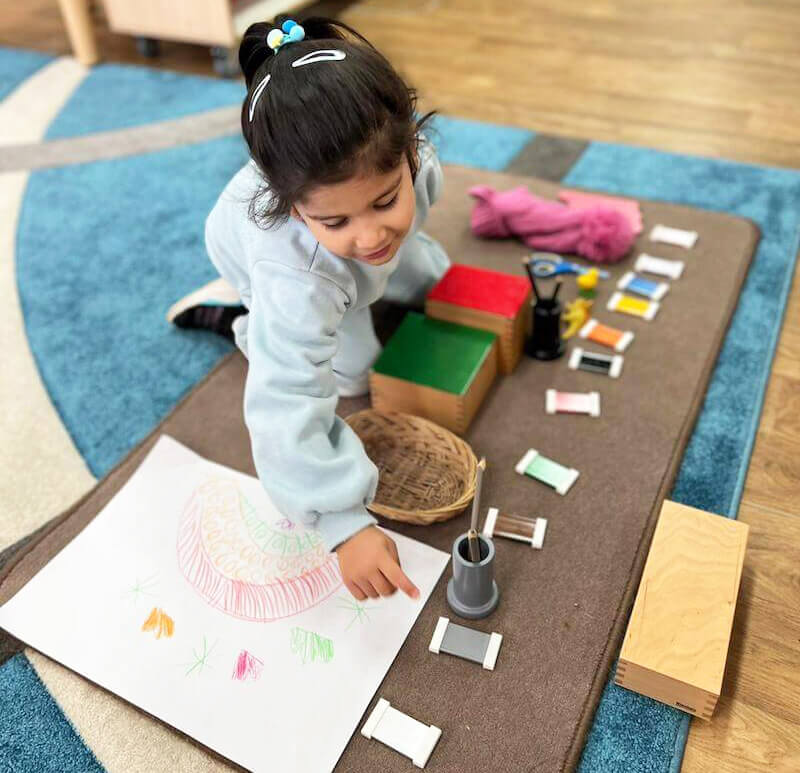
The Sensorial curriculum area offers children hands-on materials designed to isolate and refine each of the senses. By exploring qualities such as size, colour, sound, texture and weight, children are supported to observe, compare and classify the world around them.

What is the Sensorial area?

Dr Maria Montessori described young children as natural "sensorial explorers," absorbing impressions of their environment through their senses long before they can put those impressions into words. In The Absorbent Mind, she wrote that the senses, "being explorers of the world, open the way to knowledge."

Sensorial materials are designed to help children consciously notice and sort the sensory information they take in every day — for example, differences in size, colour, sound, texture, weight, taste and smell — so they can begin to bring order and understanding to their impressions of the world.

Ask us about this area

At a glance

Curriculum area
Sensorial
Age focus
Typically introduced from around 3 to 6 years
Approach
Hands-on materials that isolate one sensory quality at a time
Framework
Delivered alongside the EYLF v2.0
Assessed under
National Quality Standard (NQS)

Why we place such value on it


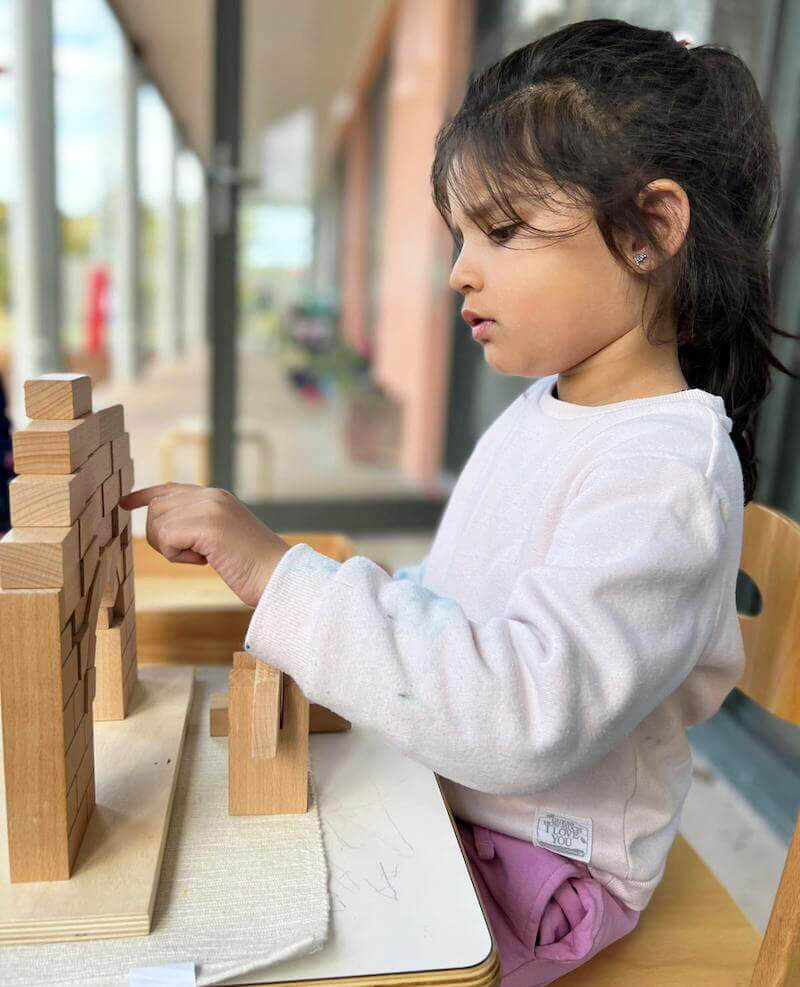
Sensorial materials are generally designed so that each one isolates a single quality — such as size, colour or sound — so a child's attention can rest on that one difference at a time. Many of the materials also include a built-in "control of error," meaning a child can often notice and correct a mismatch independently, without needing an adult to point it out.

Broadly, this area of the curriculum is associated with:

  • Refining and organising sensory perception, such as visual discrimination of size, colour and shape
  • Supporting the development of an orderly way of observing and classifying the environment
  • Building a vocabulary for describing sensory qualities, which can support later language work
  • Laying informal groundwork that may later connect with mathematical concepts, such as sequencing and gradation
  • Encouraging concentration and independent, self-corrected exploration
These points describe general tendencies noted in early childhood development and inform our program design. They are shared as background, not as a guarantee of any individual outcome — every child develops and engages with sensorial activities at their own pace.
Sensorial area

The senses explored in this area


In our program, sensorial materials are broadly organised around the five senses, offered alongside the EYLF v2.0 learning outcomes of identity, connection, wellbeing, confidence and communication.
01 · Sight

Visual Sense
Materials such as the Pink Tower and Colour Tablets invite children to compare and grade differences in size, shape and colour.
02 · Touch

Tactile Sense
Touch Boards and touch fabrics support children to explore and compare different textures, from rough to smooth.
03 · Hearing

Auditory Sense
Sound Boxes and bells encourage children to listen closely and match or grade sounds by volume and pitch.
04 · Smell

Olfactory Sense
Smelling bottles offer a gentle introduction to identifying and comparing familiar scents.
05 · Taste

Gustatory Sense
Where offered, tasting activities introduce basic taste qualities such as salty, sweet, bitter and sour.

Any activity involving food or tasting is planned and supervised in line with our service's health, hygiene and food safety policies, and takes each child's individual allergies and dietary requirements into account. Please speak with our educators about your child's specific needs.
what is Sensorial

Materials children may explore


Within a prepared Sensorial environment, materials are offered in a logical sequence, from simple to more complex, and are introduced in line with each child's stage of development. Examples may include:

  • The Pink Tower and Broad Stair, for grading differences in size
  • Colour Tablets, for matching and grading colour and shade
  • Geometric Cabinet and solids, for exploring shape and form
  • Sound Boxes and bells, for comparing and grading sound
  • Touch Boards and fabric baskets, for exploring texture
  • Smelling and tasting bottles, for exploring smell and taste

Specific materials offered may vary between rooms and over time, depending on each child's stage of development and interests. Materials are used under educator supervision and stored in line with our service's health and safety policies.

Part of a quality-assured program


Sensorial sits alongside our wider Montessori curriculum, which is delivered in line with the Early Years Learning Framework (EYLF v2.0) and assessed against the National Quality Standard (NQS). We aim to meet our obligations under the Education and Care Services National Law and Regulations, including those relating to children's health, safety and wellbeing.

Explore our curriculum
  • Educational program & practice
  • Children's health & safety
  • Physical environment
  • Relationships with children
  • Collaborative partnerships with families
— Good to know —

Frequently asked questions


A few of the questions families often ask us. Get in touch if you have a question that isn't covered here.

All FAQs
Find Out More

See Sensorial materials in action


Book a tour to visit our Sensorial shelves and prepared environment, meet our educators and ask any questions about how this area of the curriculum supports your child.