

Food Menu
Our daily meal schedule
Meals and snacks are offered at consistent times each day, giving children a predictable rhythm while still allowing flexibility to meet individual needs — including for younger infants who may follow their own feeding routine.
All food is prepared on site with reference to national nutrition guidance for early childhood settings, and drinking water is available to children throughout the day.

A typical day's meal times
Sample weekly menu
Example week — for illustration only
Meals for our youngest children
For infants, we aim to offer a variety of foods appropriate to each child's stage of development and texture needs, including iron-rich foods such as meat, fish, legumes, beans, tofu and Quorn, alongside fruit, vegetables, grains and dairy products.
- Food textures adjusted to suit each infant's individual stage of development
- Introduction of new foods discussed with families as part of our partnership approach
- Feeding routines that respond to each infant's individual needs, rather than a fixed schedule alone
- Bottles and specific infant formula or expressed milk managed in line with family instructions and our service's policies
Allergies, intolerances & dietary needs
Children with a diagnosed allergy or food intolerance are provided with a tailored version of the regular menu, developed in consultation with families, to suit their individual dietary needs.
We ask all families to provide us with up-to-date information about any allergies, intolerances, medical conditions or cultural or religious dietary requirements as part of enrolment, and to let us know promptly if this information changes.
Celebrations & everyday care



Healthy Food for Growing Children
Children need healthy, wholesome foods to support their growth, energy and learning throughout the day. At Montessori Minds, our menus are planned with this in mind, drawing on current nutrition guidelines for early childhood settings, and are reviewed regularly to offer a variety of fresh, nutritious options across the week.
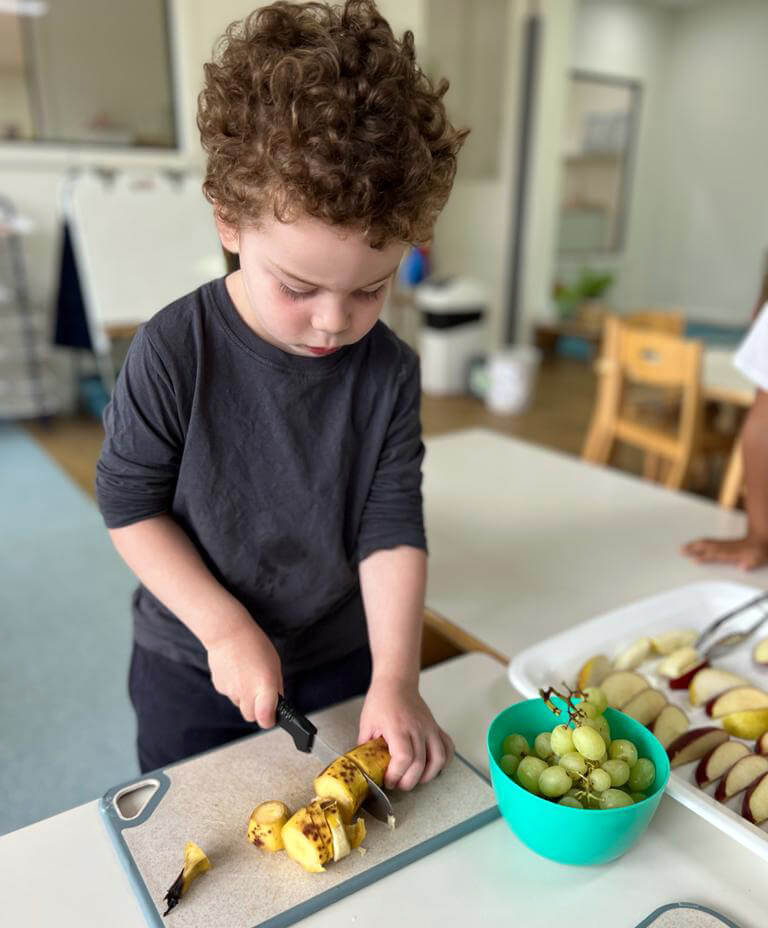
We serve meals family-style wherever possible, meaning children sit together and help themselves from shared bowls and platters with support from educators. This gives children the chance to practise skills like pouring, spooning and passing food to a friend, and to make their own choices about what and how much they eat from what's on offer. Every child's appetite, pace and preferences are different, and our educators support each child individually rather than expecting the same approach to work for everyone.
Mealtimes are also social occasions. Sitting down together gives children a regular, unhurried opportunity to talk, listen and take part in the small routines of sharing a meal — from setting the table to clearing their own plate. Over time, this can help children build a positive relationship with food and a sense of belonging around the table, alongside the practical life and self-help skills they're practising along the way.
Educators talk with children about the food in front of them — where it comes from, what it does for our bodies, and why variety matters — in simple, age-appropriate language. These everyday conversations are one way we support children's wellbeing and connect with the Early Years Learning Framework's focus on healthy lifestyles and community, alongside the National Quality Standard's requirements for healthy eating and supervised mealtimes (Quality Area 2).
If you have questions about our menus, or your child has specific dietary requirements, allergies or cultural food preferences, please speak with your room educator or our office team — we work with families individually to accommodate these wherever we can.
Guided by national nutrition & quality standards
Our approach to food and nutrition is planned with reference to the Australian Dietary Guidelines and the Get Up & Grow resources for early childhood, and sits within our broader commitment to Quality Area 2 (Children's Health and Safety) of the National Quality Standard (NQS).
- Menus planned with reference to national nutrition guidance
- Meals prepared and stored in line with food safety requirements
- Individual dietary needs recorded and reviewed with families
- Drinking water available to children throughout the day