why choose hcmc

— Montessori Curriculum Area

Practical Life


Practical Life is often described as the foundation of the Montessori environment. Through everyday, purposeful activities — from pouring and sweeping to caring for a garden — children are supported to build coordination, concentration, independence and a sense of belonging in their community.

What is Practical Life?

The Practical Life curriculum area grew out of Dr Maria Montessori's early observations of young children. She noticed that children are naturally drawn to real, purposeful tasks — the everyday activities they see the adults around them doing — and that engaging in these tasks appeared to support their concentration, coordination and sense of order.

Rather than being "just chores," Practical Life activities are presented as carefully prepared, hands-on experiences. Materials are scaled to a child's size and arranged so children can choose and return them independently, within a calm and supportive environment.

Ask us about this area

At a glance

Curriculum area
Practical Life
Age focus
Introduced from toddlerhood, extended through kindergarten
Approach
Hands-on, real-life, child-scaled materials
Framework
Delivered alongside the EYLF v2.0
Assessed under
National Quality Standard (NQS)
practical life

Why we place such value on it


Dr Montessori's observations of young children informed why Practical Life sits at the heart of our program. Broadly, these observations relate to:

  • A tendency in young children to build inner order by imitating the logical, everyday sequences they see adults follow
  • The importance of physical movement — both whole-body coordination and fine motor development
  • An emphasis on hygiene, nutrition and physical wellbeing, reflecting Dr Montessori's own background in medicine
  • A natural interest many children show in caring tasks — such as simple food preparation, gardening and tidying — and in caring for themselves
  • A spontaneous impulse in children to help maintain order in their environment
  • An emerging interest in social exchanges with peers and adults

These observations describe general tendencies noted in early childhood development and inform our program design. They are shared as background, not as a guarantee of any individual outcome — every child develops and engages with these activities at their own pace.

The four areas of Practical Life


In our program, Practical Life activities are broadly organised into four areas, offered alongside the EYLF v2.0 learning outcomes of identity, connection, wellbeing, confidence and communication.
01 · Social relations

Grace & Courtesy
Everyday social skills such as greeting others, asking for help, waiting a turn and using polite, respectful language.
02 · Movement

Control & Coordination of Movement
Activities that support balance, gross motor control and fine motor coordination, such as carrying, walking and pouring.
03 · Self-care

Care of the Person
Self-care routines including dressing, hand washing and simple grooming, supporting growing independence.
04 · Environment

Care of the Environment
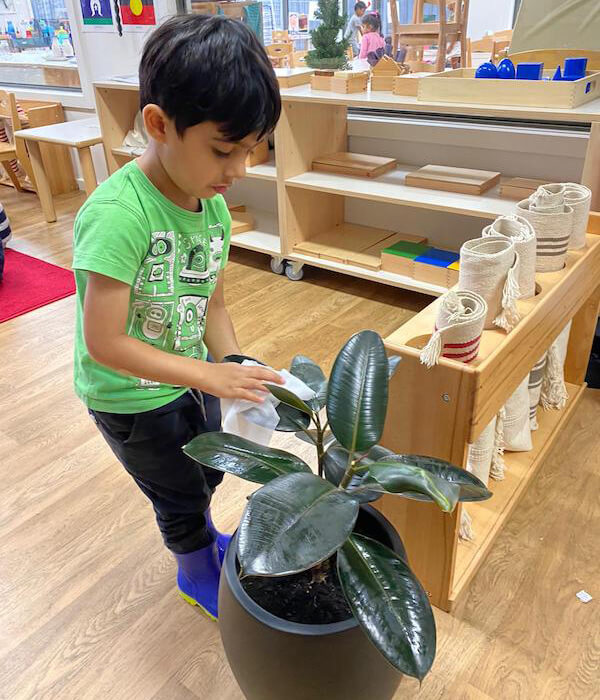
Caring for shared and natural spaces through tasks like sweeping, plant care, table washing and gardening.

Activities children may explore


Within a prepared Practical Life environment, activities are offered in a logical sequence, from simple to more complex, and are adapted to suit each child's stage of development. Examples may include:

  • Pouring, spooning and transferring exercises
  • Dressing frames for buttons, zips, buckles and laces
  • Food preparation tasks, such as washing, cutting soft fruit or spreading
  • Sweeping, dusting, table washing and plant care
  • Simple gardening in our outdoor learning spaces
  • Grace and courtesy exercises, such as greetings and offering help to others
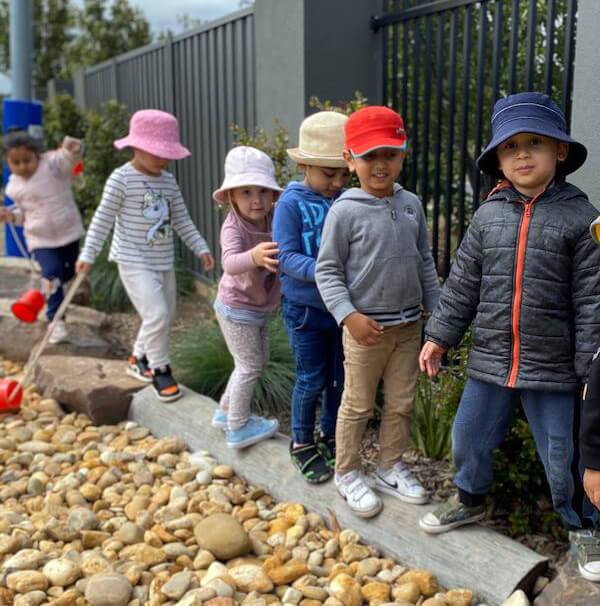
Specific activities and materials offered may vary between rooms and over time, depending on each child's stage of development and interests. Any activity involving food, tools or outdoor elements is planned and supervised in line with our service's health, safety and hygiene policies.
Image

Part of a quality-assured program


Practical Life sits alongside our wider Montessori curriculum, which is delivered in line with the Early Years Learning Framework (EYLF v2.0) and assessed against the National Quality Standard (NQS). We aim to meet our obligations under the Education and Care Services National Law and Regulations, including those relating to children's health, safety and wellbeing.

Explore our curriculum
  • Educational program & practice
  • Children's health & safety
  • Physical environment
  • Relationships with children
  • Collaborative partnerships with families
— Good to know —

Frequently asked questions


A few of the questions families often ask us. Get in touch if you have a question that isn't covered here.

All FAQs
Find Out More

See Practical Life in action


Book a tour to visit our Practical Life shelves and prepared environment, meet our educators and ask any questions about how this area of the curriculum supports your child.