

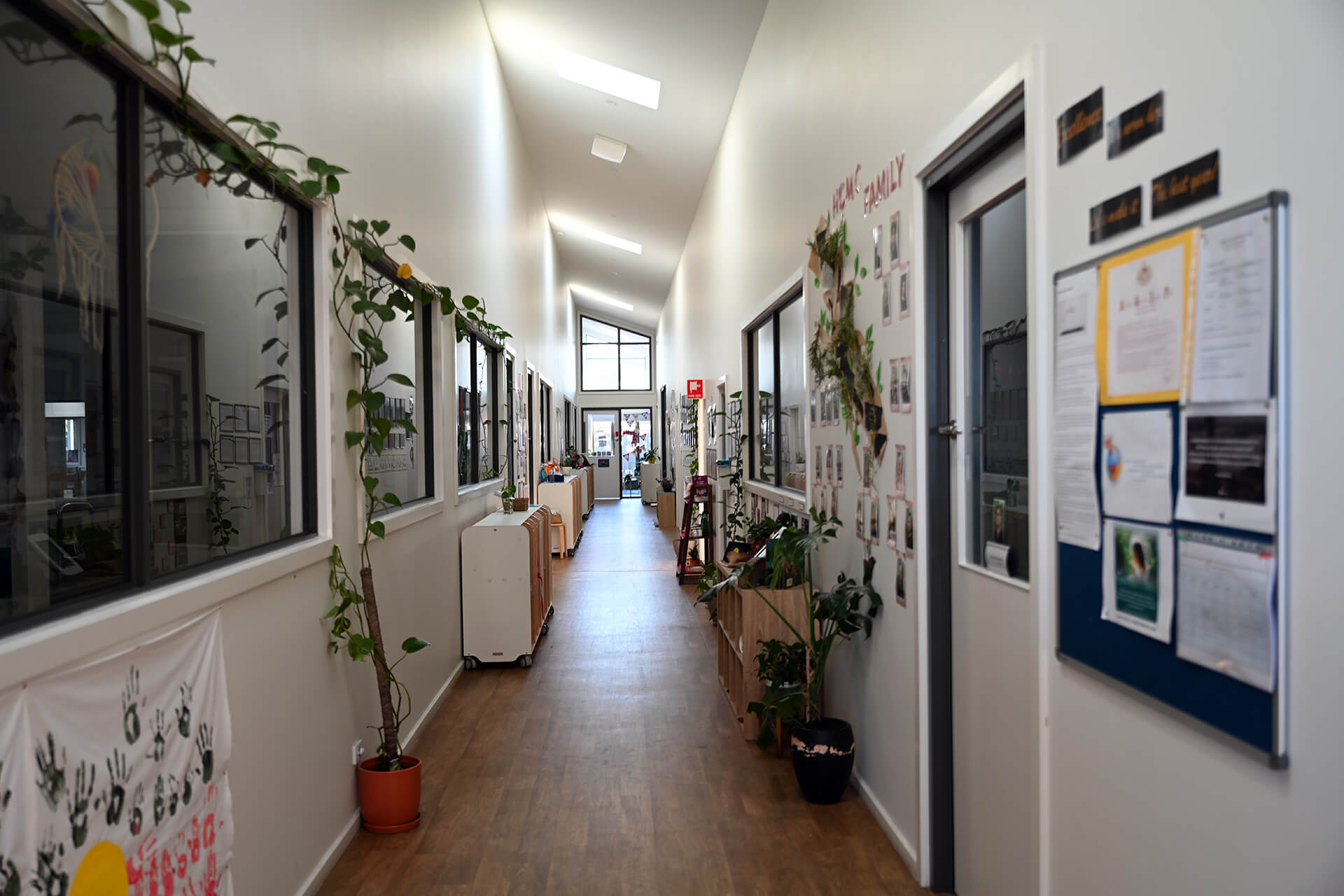
Sensorial
What is the Sensorial area?
Dr Maria Montessori described young children as natural "sensorial explorers," absorbing impressions of their environment through their senses long before they can put those impressions into words. In The Absorbent Mind, she wrote that the senses, "being explorers of the world, open the way to knowledge."
Sensorial materials are designed to help children consciously notice and sort the sensory information they take in every day — for example, differences in size, colour, sound, texture, weight, taste and smell — so they can begin to bring order and understanding to their impressions of the world.
At a glance
Why we place such value on it
Sensorial materials are generally designed so that each one isolates a single quality — such as size, colour or sound — so a child's attention can rest on that one difference at a time. Many of the materials also include a built-in "control of error," meaning a child can often notice and correct a mismatch independently, without needing an adult to point it out.
Broadly, this area of the curriculum is associated with:
- Refining and organising sensory perception, such as visual discrimination of size, colour and shape
- Supporting the development of an orderly way of observing and classifying the environment
- Building a vocabulary for describing sensory qualities, which can support later language work
- Laying informal groundwork that may later connect with mathematical concepts, such as sequencing and gradation
- Encouraging concentration and independent, self-corrected exploration
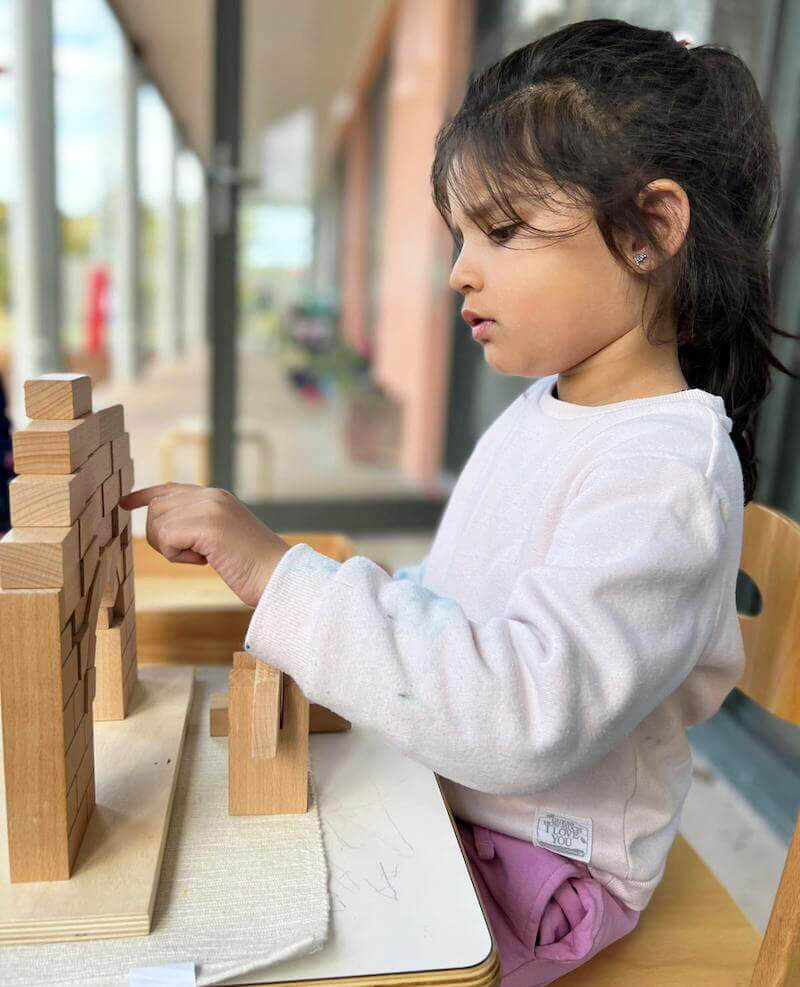
The senses explored in this area
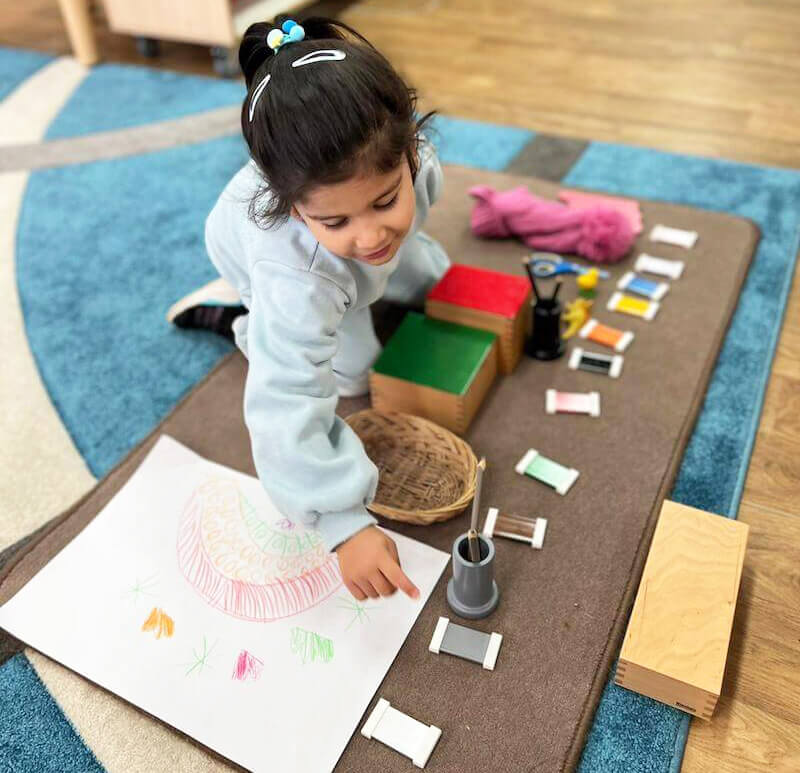
Materials children may explore
Within a prepared Sensorial environment, materials are offered in a logical sequence, from simple to more complex, and are introduced in line with each child's stage of development. Examples may include:
- The Pink Tower and Broad Stair, for grading differences in size
- Colour Tablets, for matching and grading colour and shade
- Geometric Cabinet and solids, for exploring shape and form
- Sound Boxes and bells, for comparing and grading sound
- Touch Boards and fabric baskets, for exploring texture
- Smelling and tasting bottles, for exploring smell and taste
Part of a quality-assured program
- Educational program & practice
- Children's health & safety
- Physical environment
- Relationships with children
- Collaborative partnerships with families